In the fields of materials science, structural engineering, and modern manufacturing, one question arises frequently: is aluminum magnetic? Whether you are designing industrial machinery, building custom automated workstations, or choosing materials for sensitive electronic housings, understanding how aluminum reacts to magnetic fields is critical. While aluminum is widely known for its lightweight strength and corrosion resistance, its subtle magnetic properties often dictate how it is processed, formed, and integrated into complex electromagnetic environments.
At the heart of modern structural manufacturing is the aluminum extrusion. From framing systems to high-precision aerospace components, understanding the intersection of magnetism and aluminum extrusion technology allows engineers to make informed material choices. This guide provides a comprehensive analysis of the physical principles behind aluminum’s magnetic classification, explores how aluminum extrusion profiles interact with electromagnetic fields, and highlights how Rayven’s premium manufacturing solutions deliver unmatched performance across diverse applications.
Is Aluminum Magnetic? The Quick Answer
So, is aluminum magnetic yes or no? The answer is no in normal everyday use, but technically aluminum is paramagnetic.
A standard permanent magnet generally will not stick to a clean aluminum sheet, plate, tube, or typical aluminum extrusion in the way that it sticks to carbon steel or iron.
The following comparison makes the distinction clearer:
| Material | Magnetic classification | Typical reaction to a permanent magnet | Common engineering implication |
|---|---|---|---|
| Aluminum | Paramagnetic | Extremely weak attraction | Generally treated as non-magnetic |
| Copper | Diamagnetic | Extremely weak repulsion | Generally treated as non-magnetic |
| Iron | Ferromagnetic | Strong attraction | Easily magnetized |
| Nickel | Ferromagnetic | Strong attraction | Strong magnetic response |
| Cobalt | Ferromagnetic | Strong attraction | Strong magnetic response |
| 304 stainless steel | Usually weakly magnetic in annealed condition; may become magnetic after cold working | Depends on condition | Cannot be judged by “stainless” alone |
Aluminum’s paramagnetism is documented in materials science references: it has a very small positive magnetic susceptibility, meaning its magnetization in an applied magnetic field is weak.
This is why an aluminum window frame, machine enclosure, or aluminum extrusion frame normally does not “pull” toward a magnet.
Understanding Magnetic Properties
To answer whether is aluminum magnetic or non magnetic, we must examine how materials are categorized based on their atomic structure and response to external magnetic forces. In classic material science, elements and alloys generally fall into three distinct classifications:
| Classification | Response to Magnetic Field | Permanent Magnetism? | Common Examples |
| Ferromagnetic | Strongly attracted | Yes, can be magnetized permanently | Iron, Nickel, Cobalt |
| Paramagnetic | Very weakly attracted | No, loses response when field is removed | Aluminum, Platinum, Titanium |
| Diamagnetic | Very weakly repelled | No, produces opposing temporary field | Copper, Gold, Bismuth |
So, is aluminum magnetic material? Under standard room temperature and atmospheric conditions, aluminum is classified as paramagnetic. A standard aluminum extrusions profile or stock aluminum extrusions rod will not stick to a household magnet. If you approach the question with a simple is aluminum magnetic yes or no, the practical answer for everyday applications is no. However, from a strict physics perspective, is aluminum magnetic properties strictly zero? No, because its paramagnetic nature grants it a very weak, temporary alignment in the presence of an extremely intense magnetic field.
When evaluating other common non-ferrous metals, questions like is copper magnetic material often arise. Copper is diamagnetic, meaning it is weakly repelled by a magnet, whereas aluminum is paramagnetic and weakly attracted. Similarly, engineers frequently compare aluminum with stainless alloys, asking is stainless steel 304 magnetic. While 304 stainless steel is nominally austenitic and non-magnetic, cold working can induce slight ferromagnetism—a phenomenon that does not occur in a standard aluminum 6063 extrusion or 6061 aluminum extrusion.
The Physics of Paramagnetism and Eddy Currents
At the atomic level, magnetism is dictated by electron spin and orbital movement. In ferromagnetic metals like iron, unpaired electrons align their spin states into magnetic domains that remain locked even when the external magnetic field is removed.
In contrast, aluminum’s atomic configuration does not permit permanent electron spin alignment. The magnetic pull on an aluminum extrusion frame is far too weak for human perception or standard industrial holding force.
The Lenz Effect and Eddy Currents
Even though an aluminum extrusion is non-magnetic in terms of static attraction, it actively interacts with moving magnetic fields. When a strong dynamic magnetic field passes near an extrusion aluminum component, it induces microscopic circular electrical loops within the metal called eddy currents.
According to Lenz’s Law, these eddy currents generate their own brief magnetic field that opposes the original field’s motion. This produces magnetic damping. This phenomenon is heavily utilized in industrial applications:
- Magnetic Braking Systems: High-speed trains and amusement rides utilize an aluminum extrusion rail paired with electromagnets to achieve smooth, frictionless deceleration without mechanical wear.
- Eddy Current Separators: Recycling facilities deploy strong rotating magnetic drums over a conveyor belt to propel non-ferrous aluminum extrusion scrap price materials away from inert waste streams.
- Induction Heating: Rapidly changing magnetic fields create localized eddy currents within an aluminum extrusion channel, enabling controlled thermal processing.
Practical Identification: How to Tell if Something is Aluminum
In workshops, recycling plants, and fabrication facilities, quickly identifying raw stock is vital. Knowing how to tell if something is aluminum involves a combination of quick physical tests:
- The Magnet Test: Place a strong neodymium magnet against the metal. If it clings tightly, the material is steel or iron. If it does not stick at all, you are likely holding an aluminum extrusion, copper, or austenitic stainless steel.
- Visual & Surface Inspection: Raw aluminum forms a natural oxide film, giving it a dull silvery-grey appearance. Anodized aluminum extrusions feature a smooth, durable finish available in clear, black, or custom colors.
- Weight Comparison: Aluminum has a density of roughly 2.70 g/cm³, approximately one-third that of steel or copper. An aluminum tube extrusion feels significantly lighter than a steel pipe of identical dimensions.
- Spark Test: When held against a bench grinder, steel produces bright, bursting sparks. An aluminum extrusion produces no sparks, offering a reliable safety test in hazardous environments.
- Kitchenware Applications: Consumers often ask, is aluminum magnetic cutlery viable on induction cooktops? Because standard aluminum cutlery and cookware lack ferromagnetic properties, they will not activate an induction stovetop unless fitted with a specialized stainless steel base plate.
The Engineering Advantages of Non-Magnetic Aluminum Extrusions

The non-magnetic behavior of an aluminum extrusion provides significant functional advantages across high-tech industries:
Medical Imaging (MRI Systems)
Magnetic Resonance Imaging (MRI) machines operate with superconducting magnets producing fields from 1.5T to 3.0T or higher. Any ferromagnetic structural steel near the bore would turn into a dangerous projectile or distort the image quality. Using architectural aluminum extrusions and high-precision custom aluminum extrusions ensures complete structural integrity without magnetic interference.
Electronics, Enclosures, and Workstations
High-frequency electronic assemblies, semiconductor processing lines, and automated assembly tables require enclosures that prevent electromagnetic distortion. An aluminum extrusion enclosure or an aluminum extrusion workbench built with t slot aluminum extrusion profiles isolates sensitive circuitry while providing lightweight structural support.
Aerospace and Defense Engineering
In aviation and marine navigation, stray magnetic fields can compromise delicate sensors, digital compasses, and radar arrays. Specifying aerospace aluminum extrusions and aircraft aluminum extrusions provides high strength, low weight, and magnetic neutrality.
Industrial Profile Selection: T-Slot Structural Framing Systems
One of the most widespread structural applications of extruded aluminum is the t-slot aluminum extrusion. These modular framing systems use continuous longitudinal channels, allowing components to be joined using t nuts for aluminum extrusion, specialized aluminum extrusion brackets, and robust aluminum extrusion connectors without requiring welding.
Engineers select profiles based on standard metric and fractional series. Rayven provides a comprehensive inventory of standard, heavy-duty, and custom aluminum extrusion profiles tailored to precise structural demands:
Metric T-Slot Framing Series
| Profile Series | Dimensions (mm) | Common Applications | Key Features |
| 1010 aluminum extrusion | 25 x 25 (approx) | Light-duty enclosures, sensor mounts | Compact, lightweight design |
| 1515 aluminum extrusion | 38.1 x 38.1 | Lightweight structural frames | Standard fractional entry size |
| 2020 aluminum extrusion / 20×20 aluminum extrusion | 20 x 20 | 3D printers, small automation rigs | Highly popular aluminum extrusion for 3d printer builds |
| 2040 aluminum extrusion / aluminum extrusion 2040 | 20 x 40 | Linear motion rails, light machine bases | Dual-slot profile for added bending stiffness |
| 2080 aluminum extrusion | 20 x 80 | CNC gantries, structural legs | Extended multi-slot load capability |
| 3030 aluminum extrusion | 30 x 30 | Medium machine guards, workbenches | Balanced strength-to-weight profile |
| 3060 aluminum extrusion | 30 x 60 | Heavy structural frames, display racks | High resistance to vertical deflection |
| 4040 aluminum extrusion | 40 x 40 | Standard industrial framing, automation lines | European standard for robust factory framing |
| 4080 aluminum extrusion | 40 x 80 | Heavy-duty machinery frames, base structures | Superior moment of inertia along primary axis |
| 8080 aluminum extrusion | 80 x 80 | Ultra-heavy automation frames, crane tracks | Maximum load capacity for demanding setups |
Imperial and Fractional Series
- 10 series aluminum extrusion: Based on 1.0-inch increments, ideal for compact instrument stands.
- 15 series aluminum extrusion: Based on 1.5-inch increments, widely used in North American industrial framing.
- 8020 aluminum extrusion / 80/20 aluminum extrusion / 80 20 aluminum extrusion / 80-20 aluminum extrusion: Legendary modular framing designs, including 80 20 aluminum extrusions, 80/20 aluminum extrusions, and 8020 aluminum extrusion near me stock configurations for dynamic structural builds.
- 8040 aluminum extrusion / 8040 aluminum extrusions: Heavy-duty structural profiles providing maximum rigidity for industrial enclosures.
Whether constructing an aluminum extrusion desk, an aluminum extrusion table, or a high-precision aluminum extrusion frame, selecting the appropriate aluminum extrusion sizes ensures optimal load distribution, reduced mass, and zero magnetic interference.
Manufacturing, Processing, and Alloy Selection
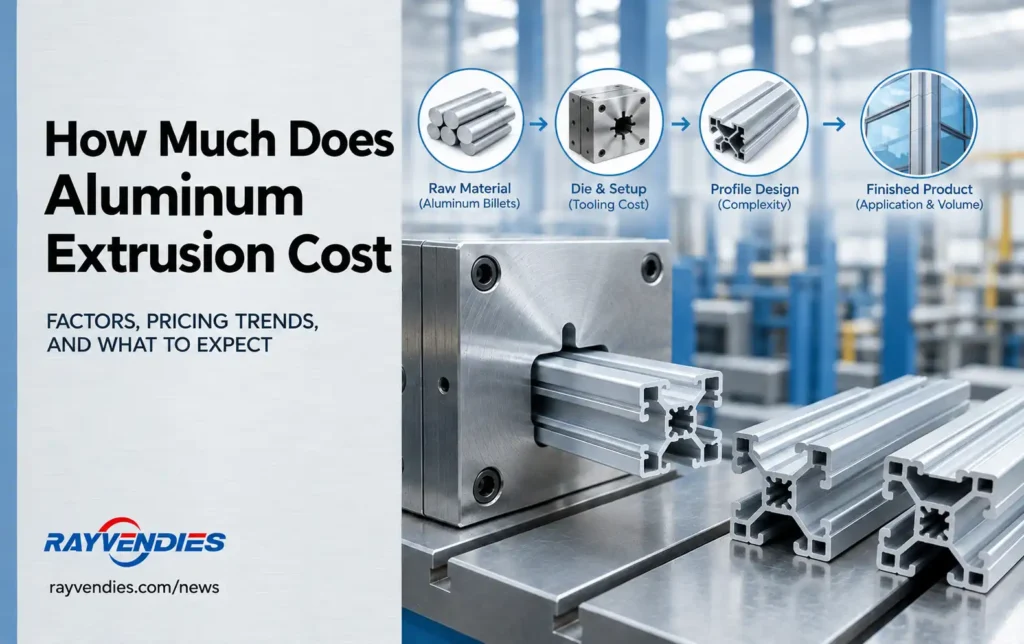
The manufacturing journey of an aluminum extrusion transforms raw billet into intricate cross-sectional shapes using specialized machinery.
- Billet Heating: Cylindrical aluminum logs are preheated to approximately 400°C–500°C (750°F–930°F) to make the metal plastic without melting it.
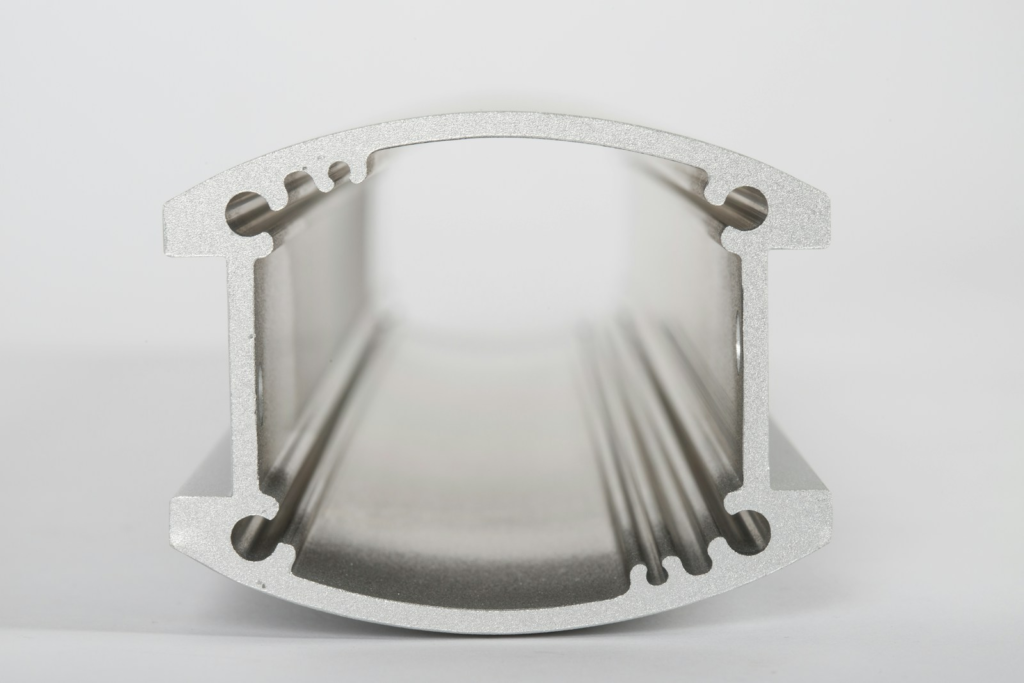
- Pressing: A powerful hydraulic aluminum extrusion press pushes the softened billet through a precision steel die, forming shapes like an aluminum channel extrusions section, an aluminum angle extrusion angle, or an aluminum extrusion tube hollow profile.
- Quenching & Stretching: As the profile emerges from the press, it is cooled with air or water and mechanically stretched to relieve internal stresses and establish dimensional straightness.
- Aging & Tempering: Profiles are heat-treated in aging ovens to achieve target mechanical properties, such as T5 or T6 tempers.
Critical Alloy Selection: 6063 vs. 6061
| Property / Feature | 6063 aluminum extrusion / aluminum 6063 extrusion | 6061 aluminum extrusion |
| Primary Alloy Elements | Magnesium, Silicon | Magnesium, Silicon, Copper |
| Tensile Strength | Moderate (~200 MPa / 29,000 psi) | High (~310 MPa / 45,000 psi) |
| Surface Finish Quality | Exceptional; ideal for anodizing | Good; slightly rougher post-machining |
| Extrudability | Very High; permits complex thin walls | High; preferred for structural shapes |
| Corrosion Resistance | Excellent | Excellent |
| Primary Applications | Architectural aluminum extrusions, door frames, t-slot aluminum extrusion profiles | Aircraft aluminum extrusions, structural frames, high-load machinery |
Both alloys retain zero permanent ferromagnetism, making them suited for advanced electro-mechanical systems.
Rayven: Your Premier Partner for Advanced Aluminum Extrusions
When sourcing high-performance aluminum extrusions, precision engineering, alloy purity, and tight dimensional tolerances are essential. Rayven is an industry-leading aluminum extrusion manufacturer, providing comprehensive solutions tailored to global industrial demands.
Why Choose Rayven for Your Aluminum Extrusion Needs?
- State-of-the-Art Production Facilities: As a premier manufacturer of aluminum extrusions, Rayven operates high-tonnage extrusion presses capable of producing everything from standard 100 standard square tube aluminum extrusion shapes to complex custom extrusion aluminum profiles.
- Extensive Stock & Fast Delivery: Looking for aluminum extrusion near me, aluminum extrusions near me, american aluminum extrusion standards, or 8020 aluminum extrusion near me fulfillment? Rayven maintains deep inventory reserves of standard aluminum extrusions, aluminum t slot extrusions, aluminum frame extrusions, aluminum extrusion slider units, and essential aluminum extrusion hardware.
- Comprehensive In-House Fabrication: Rayven is more than just an aluminum extrusion supplier or a network of aluminum extrusion suppliers. We offer full end-to-end aluminum extrusion services, including precision CNC cutting, tapping, drilling, slot milling, and custom surface finishing (such as clear or black aluminum extrusion anodizing).
- Turnkey Modular Solutions: From complete aluminum extrusion frame kits to custom aluminum extrusion frame assemblies, Rayven supplies turnkey structural components backed by rigorous quality assurance.
- Cost Efficiency: By managing the manufacturing lifecycle from billet selection through final finishing, Rayven helps customers optimize costs—offering competitive pricing compared to fluctuating market variables like the aluminum extrusion scrap price.
Whether you require high-volume architectural aluminum extrusions, specialized aerospace aluminum extrusions, or a custom aluminum extrusion t slot structural framework, Rayven’s engineering team delivers unmatched precision and reliability.
FAQ: Frequently Asked Questions About Aluminum and Magnetism
Q1: Is aluminum magnetic under any circumstances?
Under standard conditions, aluminum is non-magnetic. It is paramagnetic, meaning its attraction to magnetic fields is so minuscule that it cannot be felt or measured without sensitive scientific instruments. However, when moving through strong magnetic fields, an aluminum extrusion generates eddy currents that create temporary opposing magnetic fields.
Q2: What happens if an aluminum extrusion is combined with iron?
In hybrid assemblies featuring aluminum extrusion with iron inserts or steel fasteners, the iron or steel components will retain strong magnetic attraction, while the surrounding aluminum body remains non-magnetic. This combination is often used in magnetic latches, linear motor guides, and hybrid automated frames.
Q3: Why is t-slot aluminum extrusion preferred over steel for machinery framing?
A t slot aluminum extrusion profile offers a high strength-to-weight ratio, easy assembly using modular t nuts for aluminum extrusion, complete corrosion resistance, and total magnetic neutrality. This makes it superior to welded steel frames in environments sensitive to electromagnetic interference, such as medical MRI facilities or cleanroom automation labs.
Q4: Can anodizing make an aluminum extrusion magnetic?
No. Anodizing creates an oxide layer ($Al_2O_3$) on the surface of the aluminum. Anodized aluminum remains completely non-magnetic and non-ferromagnetic.
Q5: How do I choose between 6061 and 6063 aluminum extrusions for my project?
Choose a 6063 aluminum extrusion if your project requires clean aesthetic surface finishes, tight profile geometry, high anodizing quality, or standard structural framing. Choose a 6061 aluminum extrusion if your application demands higher structural strength, load-bearing capability, or extensive post-extrusion machining.
Elevate Your Next Engineering Project with Rayven
Navigating material properties is critical when designing high-performance structural systems. Understanding that aluminum is paramagnetic and non-magnetic ensures your designs avoid unwanted magnetic coupling, signal distortion, or mechanical interference.
Rayven provides high-precision aluminum extrusion manufacturing, die design, and custom fabrication services. Whether you need standard t-slotted aluminum extrusion stock, heavy-duty 4080 aluminum extrusion profiles, or specialized custom aluminum extrusions, our engineering team is ready to support your project from concept through production.
Contact Rayven today to speak with an engineering specialist, request a custom quote, or explore our full catalog of aluminum extrusions for sale. Let Rayven be your trusted aluminum extrusion company partner for high-precision, reliable aluminum solutions.