Yes, you can powder coat aluminum, and powder coating is one of the most practical finishing options for many aluminum products, including architectural profiles, equipment frames, automotive components, outdoor structures, and aluminum extrusion.
For manufacturers and engineers working with aluminum extrusion, the question is usually more specific than simply “Can you powder coat aluminum?” The real questions are:
- Can a particular aluminum alloy be powder coated?
- Is powder coating suitable for an aluminum extrusion?
- Can anodized or polished aluminum be powder coated?
- How durable is powder-coated aluminum?
- What happens to aluminum during the curing process?
- Should an extruded profile be anodized or powder coated?
- Can different metals be powder coated in the same project?
- What preparation is required before coating?
- How should you select a finish for an outdoor aluminum extrusion application?
The short answer is that powder coating works very well when the aluminum is properly prepared, the coating system is correctly selected, and the part can safely tolerate the curing process.
This is particularly relevant to aluminum extrusion, because extruded profiles are widely used for frames, rails, enclosures, machine guards, architectural components, workstations, and structural assemblies. A well-designed aluminum extrusion can combine low weight, corrosion resistance, dimensional consistency, and flexible finishing options.
For businesses developing a new product, choosing a powder-coated aluminum extrusion early in the design process can also simplify appearance management and provide a consistent finish across production batches.
Can You Powder Coat Aluminum?
Yes. Aluminum is an excellent substrate for powder coating when the process is properly controlled.
Unlike steel, aluminum naturally develops a thin oxide layer when exposed to oxygen. This oxide layer contributes to aluminum’s corrosion resistance, but it can also interfere with coating adhesion if the surface is not properly prepared.
The powder coating process therefore begins with cleaning and surface preparation. The supplied technical reference describes pretreatment, surface preparation, electrostatic powder application, and oven curing as the fundamental stages.
For aluminum extrusion, preparation is particularly important because profiles may arrive with mill oils, oxidation, handling contamination, previous finishes, or machining residue. A coating applied over contaminants may look acceptable initially but can suffer from poor adhesion, peeling, blistering, or premature corrosion protection failure.
A professional finishing process typically includes:
- Cleaning and degreasing
- Removal or controlled treatment of surface oxides
- Mechanical or chemical surface preparation
- Pretreatment to improve adhesion
- Electrostatic powder application
- Controlled oven curing
- Inspection of coating appearance and coverage
The exact process depends on the alloy, profile geometry, existing surface, coating specification, and intended environment.
Why Powder Coat an Aluminum Extrusion?
Aluminum is already naturally corrosion resistant, so why add another finish?
The answer is that powder coating provides more than corrosion protection. It can also provide color, texture, surface uniformity, wear resistance, branding, and visual consistency.
For an aluminum extrusion, powder coating can be particularly useful when the finished product needs a specific RAL color, matte appearance, textured surface, or branded appearance.
Typical benefits include:
| Benefit | Value for Aluminum Extrusion |
|---|---|
| Corrosion protection | Adds a protective barrier over the aluminum surface |
| Color selection | Supports a wide range of colors and finishes |
| Appearance | Produces consistent decorative surfaces |
| Wear resistance | Helps protect against scratches and everyday handling |
| UV resistance | Appropriate coating systems can improve outdoor durability |
| Design flexibility | Works with complex extruded profiles |
| Branding | Allows consistent corporate colors across components |
| Maintenance | Smooth or textured surfaces can be relatively easy to clean |
This is one reason powder-coated aluminum extrusion continues to be attractive for architectural systems, machinery, industrial equipment, transportation products, and consumer-facing structures.
How Does Aluminum Powder Coating Work?
Powder coating uses dry powder rather than conventional liquid paint.
During application, the powder particles are electrostatically charged while the aluminum component is grounded. The electrical difference attracts the powder to the surface, helping the coating distribute across the part.
After application, the coated component enters an oven. Heat causes the powder to melt, flow, and chemically cure into a continuous protective film.
The supplied reference gives a typical curing range of approximately 350–400°F (176–205°C) for around 10–20 minutes, although the exact temperature and time depend on the powder formulation and coating thickness.
For aluminum extrusion, the important point is that the curing specification should be based on the powder manufacturer’s requirements and the actual metal temperature, rather than simply the oven’s displayed air temperature.
Aluminum Powder Coating Process
1. Pretreatment
The first stage is removing contamination.
Oil, grease, dirt, dust, oxidation, and previous coatings can prevent the powder from bonding properly. The supplied source emphasizes that cleaning is essential because surface impurities can negatively affect adhesion.
A typical process can include:
- Power washing
- Alkaline cleaning
- Solvent cleaning
- Rinsing
- Drying
- Mechanical preparation
- Chemical pretreatment
For an aluminum extrusion, the cleaning method must also account for grooves, channels, internal cavities, T-slots, drilled holes, and other profile features.
2. Surface Preparation
After cleaning, the surface may require additional preparation.
Sweep blasting can remove oxidation and create a surface profile that improves coating adhesion. Phosphate treatment is another option described in the supplied reference; it creates a conversion layer intended to improve powder adhesion.
The blasting method matters.
Aluminum is softer than steel, so an abrasive system that is appropriate for heavy steel may be unnecessarily aggressive for a thin-wall aluminum extrusion. Excessive blasting can damage edges, machining surfaces, or delicate profile features. This is especially important for precision custom aluminum extrusions.
3. Powder Application
Once the surface is ready, powder is electrostatically applied.
A professional coating line can provide consistent coverage across long profiles and complex sections. This matters when coating an aluminum extrusion with slots, channels, ribs, corners, or hollow sections.
4. Curing
The coated component is heated so that the powder melts and cures.
The supplied technical material indicates a typical range of 350–400°F, or approximately 176–205°C, for about 10–20 minutes depending on the powder and coating thickness.
For engineered aluminum extrusion, curing temperature deserves additional attention when the profile is heat treated, structurally critical, or part of a precision assembly.
The question is therefore not simply “Can you powder coat aluminum?” It is also “Can this specific aluminum component safely undergo the required finishing process?”
Can You Powder Coat Aluminum 6061?
Yes, can you powder coat aluminum 6061? In general, yes.
6061 is widely used where higher mechanical performance is required. It can be found in structural frames, transportation components, machinery, brackets, fixtures, and other engineered applications.
However, powder coating should not be treated as a purely cosmetic operation on a critical 6061 component. If the material has a specific heat treatment or temper, the manufacturer or engineer should verify that the finishing process is compatible with the part’s mechanical requirements.
This is especially important when a 6061 aluminum extrusion is used for a load-bearing or safety-critical application.
For non-critical applications, powder coating can provide an attractive combination of appearance and environmental protection.
Can You Powder Coat Aluminum Alloy?
Yes, can you powder coat aluminum alloy? Most commonly used aluminum alloys can be considered for powder coating, but the exact process should be evaluated based on alloy, temper, geometry, surface condition, and application.
Not every aluminum component behaves exactly the same during pretreatment or curing.
For example:
- Wrought aluminum generally has a relatively dense structure.
- Extruded aluminum is formed through a die and typically has a consistent profile.
- Cast aluminum can contain microscopic pores that create outgassing risks during heating.
This difference becomes important when comparing cast components with aluminum extrusion.
Extruded Aluminum vs. Cast Aluminum for Powder Coating
Cast aluminum and extruded aluminum can both be powder coated, but they do not always require identical preparation.
Cast aluminum can contain microscopic voids. During oven heating, trapped air or moisture may expand and escape through the coating. This phenomenon is known as outgassing and can produce pinholes or bubbles.
By comparison, wrought and extruded aluminum is generally denser and less susceptible to the same degree of outgassing.
| Factor | Extruded Aluminum | Cast Aluminum |
|---|---|---|
| Manufacturing method | Forced through a die | Poured into a mold |
| Typical structure | Relatively dense | May contain internal porosity |
| Outgassing risk | Generally lower | Potentially higher |
| Surface preparation | Critical | Critical plus possible outgassing management |
| Powder coating | Generally suitable | Suitable with appropriate process |
| Common applications | Frames, rails, profiles, channels | Housings, wheels, decorative castings |
This distinction is important when selecting a coating process for custom aluminum extrusions.
Is Powder Coated Aluminum Durable?
One of the most common questions is: is powder coated aluminum durable?
Yes, a properly prepared and correctly coated aluminum surface can provide strong resistance to everyday wear and environmental exposure.
Powder coating is generally thicker and more impact-resistant than conventional liquid paint. The supplied reference also notes that powder coating provides stronger adhesion and greater resistance to chipping and flaking compared with conventional paint.
However, durability depends on more than the powder itself.
Important factors include:
- Alloy
- Surface preparation
- Pretreatment
- Powder chemistry
- Film thickness
- Cure conditions
- Color
- UV exposure
- Humidity
- Salt exposure
- Chemical exposure
- Mechanical impact
- Profile design
A powder-coated aluminum extrusion installed indoors in a controlled environment may have very different durability requirements from one installed outdoors near a coastline.
Can You Powder Coat Anodized Aluminum?
Yes, can you powder coat anodized aluminum?
It is possible, but anodized aluminum requires careful preparation. The existing anodized surface can affect adhesion, so the coating system must be designed around the condition of the substrate.
If an anodized aluminum extrusion needs to be recoated, simply spraying powder over the existing surface is not the ideal approach. The existing finish may need to be removed, abraded, chemically treated, or otherwise prepared according to the coating system requirements.
This is one reason it is better to determine the desired final finish before manufacturing large quantities of an aluminum extrusion.
Can You Powder Coat Polished Aluminum?
Can you powder coat polished aluminum? Yes, but polishing creates a very smooth surface, so surface preparation becomes especially important.
The polished finish may need to be mechanically or chemically prepared before powder application. Otherwise, the coating may not achieve the required adhesion.
For decorative projects using aluminum extrusion, it is generally more efficient to specify the final finish before production instead of polishing the profile first and then attempting to convert it into a powder-coated finish.
Can You Powder Coat Aluminum Trim?
Yes, can you powder coat aluminum trim?
Absolutely. Aluminum trim is a common application for powder coating because it combines decorative requirements with the need for dimensional consistency and environmental resistance.
Applications include:
- Architectural trim
- Door and window components
- Wall panels
- Furniture trim
- Equipment edges
- Retail fixtures
- Signage
- Decorative frames
A properly designed aluminum extrusion can be produced specifically for trim applications, allowing the profile geometry and final finish to be developed together.
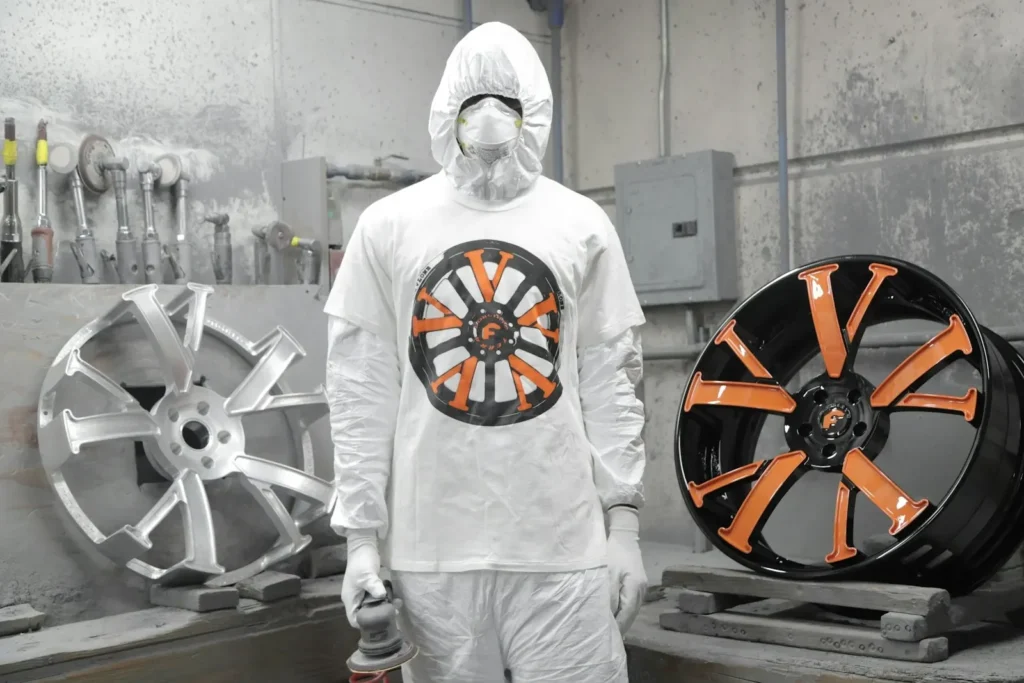
Can You Powder Coat Aluminum Wheels?
Yes, can you powder coat aluminum wheels?
Aluminum wheels are frequently powder coated, but wheels deserve more careful process control because they are exposed to heat, impact, road contamination, brake dust, moisture, and potentially corrosive chemicals.
The same applies when asking can you powder coat aluminum alloy wheels.
Wheel coating should therefore be performed by a qualified professional familiar with automotive components. Tire removal, surface preparation, masking, curing, and inspection all matter.
Can You Powder Coat an Aluminum Intake Manifold?
Yes, can you powder coat aluminum intake manifold components?
It can be possible, but the component’s operating temperature and dimensional requirements must be considered carefully.
An intake manifold is not simply a decorative object. It is part of an operating engine system and may experience significant thermal cycling. The selected powder must therefore be suitable for the actual application temperature.
The same principle applies to other engine components: always evaluate service temperature before choosing a standard architectural powder.
Can You Powder Coat an Aluminum Boat?
Yes, can you powder coat aluminum boat components?
Certain aluminum boat components can be powder coated, particularly removable hardware, frames, rails, brackets, and other suitable parts.
However, marine environments are demanding. Saltwater, UV radiation, abrasion, and constant moisture can challenge coatings.
For a marine aluminum extrusion, the coating system should therefore be selected based on the intended exposure environment rather than appearance alone.
Can You Powder Coat Aluminum at Home?
Technically, can you powder coat aluminum at home?
Small DIY powder coating systems exist, but professional powder coating involves more than spraying powder and heating a part.
A complete process may require:
- Proper cleaning
- Surface preparation
- Abrasive blasting
- Electrostatic application
- Controlled curing
- Ventilation
- Appropriate personal protective equipment
- Correct handling of coating chemicals and dust
Abrasive blasting can create serious respiratory hazards if performed incorrectly. The supplied reference specifically warns about respirable dust and crystalline silica exposure during abrasive blasting.
For expensive aluminum extrusion, large profiles, architectural components, or production parts, professional coating is usually the more predictable option.
Can You Powder Coat Aluminum Chrome?
The question can you powder coat aluminum chrome needs clarification because “chrome” can refer to a polished appearance, chrome plating, or a specific coating effect.
Powder coating can produce metallic, silver, bright, satin, or chrome-like visual effects, but it does not necessarily reproduce the exact optical characteristics of traditional chrome plating.
If appearance is the priority, request a physical sample before approving a production finish.
Can You Powder Coat Aluminum and Steel Together?
Yes, can you powder coat aluminum and steel together?
The same powder coating project can include both aluminum and steel, but the substrates may require different pretreatment, blasting, masking, and process considerations.
Steel also requires careful corrosion protection, especially where bare steel could become exposed.
If an assembly combines an aluminum extrusion with steel brackets, fasteners, or structural components, designers should also consider galvanic corrosion and whether the two materials should be isolated.
Can You Powder Coat Steel?
Yes, can you powder coat steel? Steel is one of the most common powder coating substrates.
The key difference is that steel and aluminum require different preparation strategies.
For example, blasting aluminum too aggressively can damage a thin profile, while steel often tolerates more aggressive surface preparation.
When a product combines steel and an aluminum extrusion, the coating specification should address both materials rather than treating the assembly as one identical substrate.
Can You Powder Coat Plastic?
The answer to can you powder coat plastic is more complicated.
Traditional powder coating requires heating, so ordinary plastics may deform, melt, or otherwise fail during curing.
Specialized low-temperature powders and alternative coating technologies exist for certain heat-sensitive substrates, but conventional powder coating should not automatically be assumed suitable for plastic.
This is especially important for assemblies containing plastic components, rubber seals, bearings, inserts, or electronics.
Can You Powder Coat Cast Iron?
Yes, can you powder coat cast iron?
Cast iron can be powder coated, but surface preparation is essential. Rust, oil, graphite residue, and surface contamination must be properly addressed.
As with cast aluminum, cast materials can also present geometry and surface challenges that affect coating quality.
Powder Coating vs. Anodizing for Aluminum Extrusion
Powder coating and anodizing are two of the most common finishing methods for an aluminum extrusion.
Anodizing thickens the natural aluminum oxide layer through an electrochemical process. The resulting layer becomes part of the surface rather than sitting on top as a conventional coating.
Powder coating creates a separate protective film and provides significantly greater flexibility in color and texture.
| Feature | Powder Coating | Anodizing |
|---|---|---|
| Color selection | Very broad | More limited |
| Texture options | Matte, gloss, satin, textured | More limited |
| Surface appearance | Opaque | Often metallic/translucent |
| UV performance | Depends on powder system | Generally strong |
| Repairability | Can be repaired or recoated | More difficult |
| Custom branding | Excellent | More limited |
| Common use | Frames, architecture, equipment | Architectural and functional profiles |
For a black aluminum extrusion, for example, both black anodizing and black powder coating may be suitable. The better option depends on the required appearance, durability, color consistency, and application environment.
Powder Coating vs. Paint
Traditional liquid paint remains useful, but powder coating offers several advantages for many aluminum extrusion applications.
The supplied reference notes that powder coating is generally thicker, has stronger surface adhesion, and provides greater resistance to chipping and flaking than conventional paint.
Powder coating is therefore particularly attractive when a finished aluminum extrusion will experience frequent handling, outdoor exposure, vibration, or mechanical contact.
Popular Aluminum Extrusion Profiles That Can Be Powder Coated
Powder coating is not limited to decorative profiles.
It can be used on many common profile families, including:
- 1010 aluminum extrusion
- 2020 aluminum extrusion
- 2040 aluminum extrusion
- 3030 aluminum extrusion
- 4040 aluminum extrusion
- 4080 aluminum extrusion
- 8040 aluminum extrusion
- 8080 aluminum extrusion
- 1515 aluminum extrusion
- 15 series aluminum extrusion
- 10 series aluminum extrusion
- 20 20 aluminum extrusion
- 20×20 aluminum extrusion
- 2080 aluminum extrusion
- 3060 aluminum extrusion
For modular framing applications, 8020 aluminum extrusion, 80 20 aluminum extrusions, and 80/20 aluminum extrusion systems are particularly recognizable examples of T-slot framing.
The same finishing principle applies to t slot aluminum extrusion, aluminum extrusion t slot, aluminum t slot extrusion, t-slot aluminum extrusion, and t slotted aluminum extrusions.
A black powder-coated aluminum extrusion frame can provide a professional appearance while helping protect the profile surface.
T-Slot Aluminum Extrusion and Powder Coating
The combination of T-slot framing and powder coating is particularly useful for industrial equipment.
A t-slot aluminum extrusion system can be used to construct:
- Machine frames
- Workstations
- Safety guards
- Automation equipment
- Conveyor structures
- Test stands
- Display systems
- Enclosures
- 3D printer frames
Components such as t nuts for aluminum extrusion, aluminum extrusion connectors, aluminum extrusion brackets, and other aluminum extrusion hardware allow the finished frame to be assembled without extensive welding.
Powder coating can then provide the finished structure with a consistent appearance.
For customers searching for aluminum extrusion for 3d printer, aluminum extrusion workbench, aluminum extrusion table, or aluminum extrusion desk, finish selection can be just as important as profile size.
6061 vs. 6063 Aluminum Extrusion
Two common alloy families deserve particular attention: 6061 and 6063.
6061 aluminum extrusion is commonly selected where higher strength is important, while 6063 aluminum extrusion is widely used for architectural and appearance-sensitive profiles because of its extrusion and finishing characteristics.
A simplified comparison is:
| Characteristic | 6061 | 6063 |
|---|---|---|
| Strength | Higher | Moderate |
| Extrudability | Good | Excellent |
| Surface appearance | Good | Excellent |
| Architectural use | Moderate | Very common |
| Structural applications | Strong candidate | Common for lighter-duty designs |
| Powder coating | Suitable | Suitable |
The correct alloy should be selected based on engineering requirements rather than coating preference alone.
Common Aluminum Extrusion Shapes and Applications
The versatility of extrusion allows manufacturers to create many profiles.
Examples include:
- aluminum channel extrusions
- aluminum extrusion channel
- aluminum angle extrusion
- aluminum corner extrusion
- aluminum extrusion rail
- aluminum extrusion tube
- aluminum tube extrusion
- aluminum frame extrusion
- aluminum frame extrusions
- aluminum t extrusion
- slotted aluminum extrusion
- aluminum extrusion enclosure
- aluminum extrusion for 3d printer
- architectural aluminum extrusions
- aerospace aluminum extrusions
- aircraft aluminum extrusions
For architectural projects, color and surface consistency can be critical. For industrial equipment, scratch resistance and maintenance may matter more.
That is why a good aluminum extrusion supplier should understand not only the profile but also the intended finishing requirements.
Standard vs. Custom Aluminum Extrusion
Stock profiles are convenient for prototypes and modular systems, but custom profiles can provide better material efficiency and integration for production products.
A custom aluminum extrusion can incorporate:
- Mounting channels
- Snap-fit features
- Fastener locations
- Internal cavities
- Cable-management paths
- Decorative surfaces
- Structural ribs
- Seal grooves
- Assembly interfaces
This can eliminate unnecessary machining and reduce the number of separate components.
For manufacturers evaluating custom aluminum extrusions suppliers, the ideal partner should be able to discuss alloy selection, profile design, tooling, finishing, fabrication, and final application requirements.
What About Anodized Aluminum Extrusions?
Anodized aluminum extrusions are already protected with an anodic oxide layer.
They remain attractive where a metallic aluminum appearance is desired, particularly for architectural applications.
However, powder coating may be preferable when the customer needs:
- A specific color
- High visual uniformity
- Strong branding
- Textured surfaces
- Matte finishes
- Custom color matching
The choice between anodizing and powder coating should therefore be made at the product-design stage.
Aluminum Extrusion Design Considerations Before Powder Coating
Powder coating cannot fix every design problem.
Sharp edges are one example. During curing, the coating can become thinner around extremely sharp edges, making them more vulnerable to damage. The supplied source recommends rounding sharp edges before coating.
Other design considerations include:
Hollow Profiles
Capped hollow profiles can trap air and moisture.
Drainage
Profiles used outdoors may require appropriate drainage or weep holes.
Welded Assemblies
Poorly sealed overlaps and seams can trap moisture and contaminants.
Heat-Sensitive Components
Rubber, plastic, bearings, electronics, and other heat-sensitive components may need to be removed before curing.
These considerations should be addressed before an aluminum extrusion frame reaches the finishing stage.
Aluminum Extrusion Sizes and Popular Profiles
Customers often search for aluminum extrusion sizes before deciding whether a standard profile will work.
Common modular profile families include:
- 1010
- 2020
- 2040
- 3030
- 4040
- 4080
- 6060
- 8040
- 8080
- 1515
- 2020
- 2080
The numbers generally refer to nominal profile dimensions within the manufacturer’s sizing system, but exact dimensions and slot standards vary by supplier.
This is important when comparing 80-20 aluminum extrusion, 80/20 aluminum extrusion, and similar modular framing systems. Do not assume that profiles from different manufacturers are automatically interchangeable.
How to Choose an Aluminum Extrusion Supplier
Whether you search for aluminum extrusions near me, aluminum extrusion near me, 8020 aluminum extrusion near me, or national aluminum extrusion suppliers, price should not be the only criterion.
Evaluate:
- Alloy availability
- Profile design support
- Die/tooling capabilities
- Tolerance control
- Cutting and machining
- Surface preparation
- Powder coating capability
- Color consistency
- Packaging
- Production capacity
- Quality control
- Delivery capability
A capable aluminum extrusion company can help determine whether a standard profile is sufficient or whether a custom design makes more economic sense.
This becomes particularly important for custom aluminum extrusions, stock aluminum extrusions, and repeat-production programs.
Aluminum Extrusion Manufacturing and Powder Coating
The extrusion process starts with an aluminum billet that is heated and pushed through a die to create the desired cross-sectional profile.
After extrusion, profiles may undergo:
- Stretching
- Cutting
- Heat treatment
- CNC machining
- Drilling
- Punching
- Deburring
- Assembly
- Anodizing
- Powder coating
This means the best time to discuss powder coating is often before the aluminum extrusion press produces the production profile.
Designers can then consider coating thickness, masking requirements, tolerances, interfaces, and assembly methods before finalizing the extrusion.
What Makes a Good Powder-Coated Aluminum Extrusion?
A high-quality finished profile depends on the entire manufacturing chain.
The ideal process combines:
Correct alloy → accurate extrusion → controlled surface preparation → appropriate pretreatment → consistent powder application → controlled curing → final inspection
This is why simply asking whether an aluminum extrusion can be powder coated is only the first step.
The more useful question is whether the entire extrusion and finishing process is engineered around the final application.
Rayven: From Aluminum Extrusion Concept to Finished Product
For companies developing a new frame, enclosure, workstation, machine structure, architectural component, or other profile-based product, Rayven can be positioned as a project-focused resource for discussing the right aluminum extrusion solution and finishing requirements.
Rather than selecting a profile based only on catalog dimensions, customers should consider the complete product:
- Required profile geometry
- Alloy and temper
- Structural requirements
- Surface finish
- Powder coating color
- Indoor or outdoor environment
- Assembly method
- Machining requirements
- Hardware requirements
- Packaging and delivery
This approach is particularly valuable when a standard profile is close to the required specification but not quite right.
For custom projects, a custom aluminum extrusion can integrate functional features directly into the profile, reducing machining, components, and assembly steps.
Rayven’s customer consultation can be positioned around understanding the application first, then identifying the appropriate profile and finishing direction rather than treating extrusion as a commodity product.
For businesses comparing aluminum extrusion manufacturers, aluminum extrusion companies, or a manufacturer of aluminum extrusions, this application-oriented approach can help reduce design revisions and improve production efficiency.
Why Powder-Coated Aluminum Extrusion Is Attractive for B2B Projects
B2B buyers increasingly evaluate suppliers based on total project value rather than material price alone.
A finished aluminum extrusion solution can provide several advantages:
- Lightweight construction
- Modular assembly
- Consistent appearance
- Corrosion resistance
- Design flexibility
- Easier fabrication
- Reduced secondary operations
- Repeatable production
- Custom finishing
For example, a powder-coated aluminum extrusion enclosure can combine structural support with a finished appearance, while a powder-coated aluminum extrusion workbench can provide a professional surface for industrial environments.
Likewise, an aluminum extrusion rail can be finished to match surrounding equipment rather than remaining in raw mill finish.
Powder Coating Checklist for Aluminum Extrusion Projects
Before placing a production order, confirm the following:
| Question | Why It Matters |
|---|---|
| What alloy is being used? | Determines mechanical and finishing considerations |
| Is the profile new or previously coated? | Changes preparation requirements |
| Is it cast or extruded? | Affects porosity and outgassing risk |
| Is it anodized? | Existing surface must be evaluated |
| What environment will it see? | Determines coating requirements |
| What color is required? | Affects powder selection |
| What gloss level is required? | Determines appearance |
| Are sharp edges present? | Can reduce coating coverage |
| Are there hollow sections? | May require drainage considerations |
| Are plastic or rubber components attached? | May not tolerate curing temperatures |
| What dimensions are required? | Coating adds a surface layer |
| Is the profile structural? | Heat exposure must be considered |
Frequently Asked Questions
Can you powder coat aluminum?
Yes. Aluminum can be powder coated when it is correctly cleaned, prepared, coated, and cured. The process can improve appearance, wear resistance, and environmental protection.
Can you powder coat aluminum 6061?
Yes, but the component’s temper, heat treatment, geometry, and service requirements should be considered before coating.
Can you powder coat aluminum alloy?
Yes. Many aluminum alloys can be powder coated, although preparation and finishing requirements vary.
Is powder coated aluminum durable?
Yes. Properly prepared powder-coated aluminum can provide good resistance to everyday wear, impact, weather, and corrosion. Actual performance depends on the coating system and service environment.
Can you powder coat aluminum wheels?
Yes. Aluminum wheels are commonly powder coated, but automotive components should be processed by an experienced professional because of their service temperature and operating environment.
Can you powder coat aluminum at home?
Small projects may technically be possible, but professional equipment provides better control over preparation, application, curing, and safety.
Can you powder coat anodized aluminum?
Yes, but the anodized surface must be properly evaluated and prepared to achieve reliable adhesion.
Can you powder coat polished aluminum?
Yes, but polishing creates a smooth surface, so appropriate preparation is essential.
Can you powder coat aluminum and steel together?
Yes, but aluminum and steel require different surface preparation considerations. Galvanic corrosion should also be considered when the two metals are assembled together.
Can you powder coat plastic?
Conventional powder coating requires elevated curing temperatures, so ordinary plastic is generally not a direct substitute for metal substrates.
Can you powder coat cast iron?
Yes. Cast iron can be powder coated after suitable cleaning and surface preparation.
Final Answer: Can You Powder Coat Aluminum?
So, can you powder coat aluminum?
Yes—and for many applications, powder coating is an excellent finishing solution.
The strongest results come from treating coating as part of the product design rather than as an afterthought. This is especially true for aluminum extrusion, where profile geometry, alloy, surface condition, machining, assembly, and finishing all influence the final result.
For a standard aluminum extrusion, powder coating can provide a durable, consistent, customizable surface. For a custom aluminum extrusion, the finishing requirements can be incorporated into the design from the beginning.
Whether you need a t-slot aluminum extrusion, aluminum extrusion frame, aluminum extrusion enclosure, aluminum extrusion table, aluminum extrusion workbench, architectural aluminum extrusions, or a completely custom aluminum extrusion, the right combination of profile, alloy, preparation, and finish can significantly improve the final product.
Rayven can help you move from a basic extrusion requirement toward a more complete product solution—covering profile selection, application requirements, finishing direction, and project consultation.
Looking for the right aluminum extrusion for your next project? Contact Rayven to discuss your profile requirements, application, finish, and customization needs.