Yes, you can solder aluminum, but it is considerably more difficult than soldering copper, brass, or other common metals. The main problem is not simply aluminum’s melting temperature. Aluminum rapidly develops a thin, highly stable aluminum oxide layer when exposed to air, and that oxide layer prevents ordinary solder from properly wetting and bonding to the underlying metal. Aluminum also conducts heat very efficiently, making localized heating more difficult.
For engineers, fabricators, maintenance technicians, and manufacturers working with aluminum extrusion, this distinction is especially important. Many structural profiles, T-slot frames, channels, tubes, rails, and custom sections are manufactured through the extrusion process. These profiles are often assembled mechanically rather than soldered, but there are situations where brazing, soldering, welding, or another joining method may be considered.
The short answer is:
| Question | Short answer |
|---|---|
| Can you solder aluminum? | Yes, with specialized filler and aluminum-compatible flux. |
| Can you solder aluminum with a soldering iron? | Sometimes, particularly for small or thin components. |
| Can you solder aluminum without flux? | Usually not reliably. |
| Can you solder aluminum to copper? | Yes, but the joint requires appropriate filler, flux, and joint design. |
| Can you solder aluminum to steel? | Possible in some applications, but considerably more difficult. |
| Can you solder aluminum cans? | Technically possible, but the thin material makes heat control difficult. |
| Can you solder an aluminum radiator? | Yes, specialized aluminum repair products are available. |
| Can you solder aluminum tubing? | Yes, depending on alloy, wall thickness, and service requirements. |
| Is aluminum soldering the same as welding? | No. Soldering and brazing use a filler metal without melting the base metal; welding generally involves fusion of the base materials. |
For most structural applications involving aluminum extrusion, however, soldering is not the first choice. Mechanical fastening, specialized connectors, welding, or brazing may provide a more appropriate combination of strength, serviceability, appearance, and production efficiency.
Why Is Aluminum Difficult to Solder?
The biggest obstacle when working with aluminum is its oxide layer.
Fresh aluminum reacts with oxygen almost immediately, producing aluminum oxide on the surface. This oxide is extremely thin but highly refractory. Conventional tin-lead or tin-silver solder does not readily penetrate or wet this surface.
This explains why aluminum behaves differently from copper.
When soldering copper, a suitable flux can remove surface oxides and allow molten solder to wet the copper. With aluminum, the oxide layer is more resistant, so both surface preparation and flux chemistry become much more important.
Heat transfer is another challenge. Aluminum has high thermal conductivity, so heat applied to one point quickly spreads through the workpiece. A small component may therefore require more total heat than expected even though the aluminum itself has a relatively low melting point compared with many engineering metals.
The same characteristic is important when manufacturing aluminum extrusion. Aluminum’s ability to transfer heat efficiently is one reason extruded aluminum is widely used in heat sinks, lighting profiles, electronic enclosures, and thermal-management components.
However, good thermal conductivity is helpful in service and challenging during localized soldering.
Can You Solder Aluminum With a Soldering Iron?
Yes, but the answer depends heavily on the application.
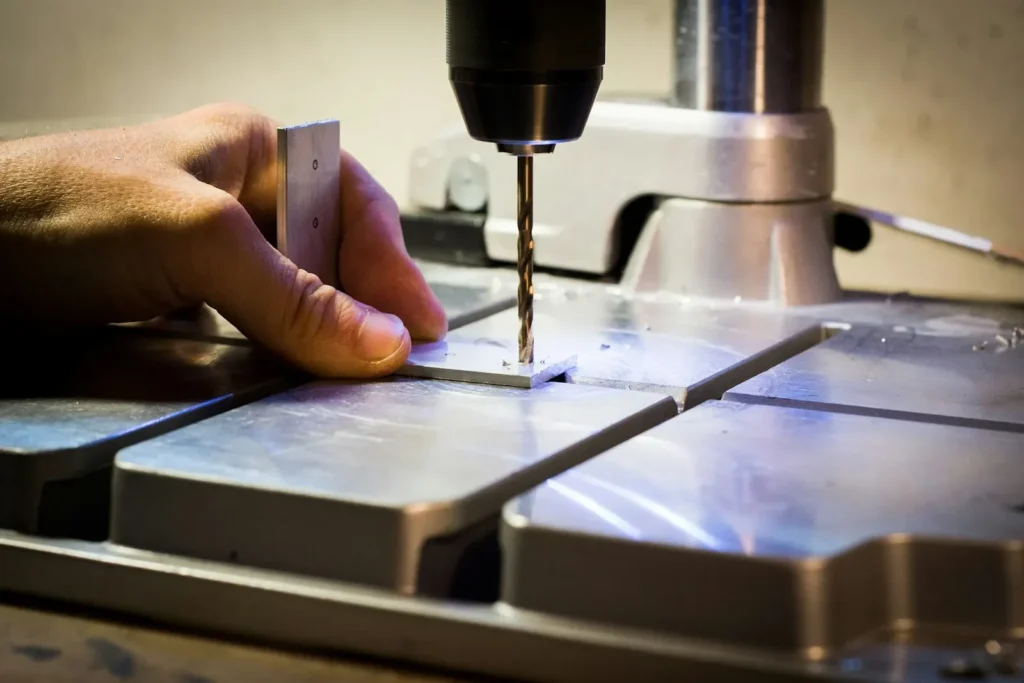
If you are asking can you solder aluminum with a soldering iron, the answer is generally yes for small wires, thin sheets, small electrical components, or specially prepared surfaces. A high-power soldering iron may be required because a conventional low-wattage electronics iron may lose heat faster than the aluminum can be brought to the required working temperature.
For larger aluminum extrusion profiles, however, a conventional soldering iron is generally impractical.
A large 6063 profile, for example, can act as a substantial heat sink. The iron may not provide enough thermal energy to raise the joint area to the filler-metal working temperature.
For small aluminum parts, consider:
- Clean the joint thoroughly.
- Remove surface contamination.
- Abrade the oxide layer immediately before soldering.
- Apply aluminum-compatible flux.
- Heat the aluminum rather than simply heating the solder.
- Apply the specialized filler when the workpiece reaches the correct temperature.
- Allow the joint to cool naturally.
- Remove corrosive flux residues according to the flux manufacturer’s instructions.
A specialized aluminum soldering kit can simplify the process because it may include aluminum-compatible filler, flux, brushes, and application accessories.
Can You Solder Aluminum Without Flux?
The practical answer to can you solder aluminum without flux is usually no.
Flux plays an important role in removing or disrupting surface oxides and improving wetting. Aluminum-specific flux is formulated differently from ordinary electronics flux because aluminum oxide is more difficult to overcome.
An appropriate aluminum solder flux should be selected according to the filler metal and working temperature.
However, there is an important technical nuance. Some aluminum joining products combine filler and flux or rely on mechanical oxide disruption during heating. Certain specialized processes may therefore appear to work without separately applying liquid flux.
That does not mean flux chemistry is irrelevant.
For production work involving aluminum extrusion, the joining process should be selected based on the actual alloy, surface finish, joint geometry, service temperature, required strength, and corrosion environment rather than simply choosing the easiest soldering method.
What Temperature Is Required to Solder Aluminum?
The required temperature depends on the filler alloy.
Pure aluminum melts at approximately 660°C (1,220°F), but a soldering or brazing filler should melt below the melting temperature of the aluminum base material.
This distinction is critical.
A filler that melts above approximately 450°C is technically classified as a brazing filler under commonly used definitions, even though commercial products may sometimes be marketed casually as “aluminum solder.”
For example, specialized tin-zinc and zinc-aluminum fillers are available for aluminum joining. Indium’s technical documentation describes aluminum joining approaches that use specialized filler/flux systems and notes the need for appropriate flux chemistry when higher-temperature fillers are used.
The goal is not to melt the aluminum extrusion itself.
Instead, you heat the base metal sufficiently for the filler to melt and wet the prepared surface.
Can You Solder Aluminum Cans?
Yes, can you solder aluminum cans is a technically interesting question, but it is not necessarily an easy repair.
Aluminum cans are extremely thin. Their small wall thickness means the material can overheat, distort, or melt through before a reliable joint forms.
The major challenges are:
- Very thin material
- Rapid heat transfer
- Oxide formation
- Low tolerance for excessive heat
- Difficulty maintaining joint alignment
- Potential contamination from coatings or residues
For experimental work, a specialized low-temperature aluminum filler may be used. However, aluminum cans are not representative of structural aluminum extrusion applications.
If the objective is to create a durable structural component, using an appropriately designed extruded profile is usually far more reliable than attempting to fabricate the same structure from thin can stock.
Can You Solder Aluminum Sheet Metal?
Yes, can you solder aluminum sheet metal is another application where the answer depends on thickness and alloy.
Thin sheet requires careful temperature control. Thick sheet requires substantially more heat because aluminum quickly distributes heat away from the joint.
The surface must be cleaned immediately before joining. Mechanical abrasion can help remove oxide, but the freshly exposed aluminum should be protected from re-oxidizing before the filler is applied.
For sheet-metal fabrication, the alternatives should also be considered:
- TIG welding
- MIG welding
- Aluminum brazing
- Mechanical fastening
- Riveting
- Adhesive bonding
- Specialized clinching
- Hybrid joining
When the final structure needs repeatable dimensions and modular assembly, aluminum extrusion may eliminate the need for many sheet-metal joints altogether.
Can You Solder Aluminum to Copper?
Yes, can you solder aluminum to copper is a common engineering question because aluminum and copper are both widely used conductive materials.
However, aluminum-to-copper joints are more complicated than aluminum-to-aluminum joints.
The two metals have different thermal expansion behavior, different surface chemistry, and different electrochemical characteristics. In electrical applications, galvanic corrosion and long-term contact resistance must be considered.
Possible joining approaches include:
- Specialized soldering
- Brazing
- Plating
- Mechanical compression
- Bimetallic transition components
- Ultrasonic joining
- Friction-based joining
- Welding processes designed for dissimilar metals
For electrical applications, do not select a joining method solely because the filler appears to adhere during a bench test.
The joint must also meet the required electrical, thermal, mechanical, and environmental specifications.
Can You Solder Aluminum to Brass?
Yes, can you solder aluminum to brass is technically possible with an appropriate process.
As with aluminum-to-copper joints, surface preparation is critical. Aluminum’s oxide layer makes direct wetting difficult, while brass has very different metallurgical and thermal characteristics.
A specialized filler and flux combination may be required.
For industrial structures, it is usually preferable to minimize unnecessary dissimilar-metal joints. If a modular aluminum extrusion frame needs brass accessories, mechanical fasteners, inserts, or specially designed interface components may provide a more predictable solution.
Can You Solder Aluminum to Steel?
Can you solder aluminum to steel is a more challenging question.
Aluminum and steel differ significantly in melting temperature, thermal expansion, surface chemistry, and metallurgical behavior. Direct fusion welding can therefore be difficult, and conventional aluminum soldering may not provide the mechanical performance required for structural applications.
Specialized brazing, transition materials, plating, or mechanical joining may be more appropriate.
For example, if an aluminum extrusion frame needs to interface with a steel machine base, a bolted connection may be preferable to trying to create a soldered joint between the two materials.
This is one reason modular extrusion systems are valuable: the frame can be connected to other materials without requiring every interface to be permanently welded.
Can You Solder Aluminum With Silver Solder?
Can you solder aluminum with silver solder requires clarification because “silver solder” covers several different filler-metal systems.
Traditional silver-bearing brazing alloys are not automatically suitable for aluminum. A filler designed for copper, brass, or stainless steel may not properly wet aluminum.
The filler must be specifically rated for aluminum or for the aluminum-to-metal combination being joined.
Always check:
- Filler composition
- Melting range
- Flux compatibility
- Base-metal compatibility
- Joint clearance
- Service temperature
- Required mechanical strength
For structural aluminum extrusion, the filler should be selected from the actual engineering specification rather than from a generic “silver solder” label.
Can You Solder Aluminum With Lead?
Can you solder aluminum with lead is generally not a good approach.
Traditional lead-containing solder is not a reliable general-purpose solution for aluminum because the oxide layer remains a major obstacle. In addition, lead is undesirable for many modern manufacturing, electrical, consumer, and regulated applications.
Lead-free aluminum-compatible filler systems are generally preferable where technically appropriate.
A modern aluminum solder flux and compatible filler should be chosen as a system.
Can You Solder an Aluminum Radiator?
Yes, can you solder aluminum radiator is a common repair question.
Aluminum radiators can be repaired using specialized aluminum soldering or brazing products, depending on the damage, alloy, wall thickness, pressure requirements, and operating temperature.
However, a radiator repair should not be evaluated only by whether the filler sticks.
The joint needs to withstand:
- Thermal cycling
- Vibration
- Internal pressure
- Coolant exposure
- Corrosion
- Repeated expansion and contraction
The same principle applies to any aluminum extrusion used in a functional assembly: adhesion alone does not equal engineering performance.
Can You Solder Aluminum Tubing?
Yes, can you solder aluminum tubing depends on the tube alloy, diameter, wall thickness, operating pressure, and temperature.
Thin tubing can be easily overheated. Thick tubing requires greater heat input. Tubing used in refrigeration, HVAC, automotive, hydraulic, or pressure systems requires particular care because joint failure can have serious consequences.
For non-pressure structural tubing, mechanical joining or welding may be simpler.
For applications where appearance, dimensional precision, and modularity matter, aluminum extrusion can also be produced in hollow or semi-hollow profiles. Custom extruded tubes can incorporate mounting features, channels, ribs, and other geometry directly into the profile.
Can You Solder Aluminum Jewelry?
Can you solder aluminum jewelry is possible but unusual compared with traditional jewelry metals.
Silver, gold, copper, brass, and other jewelry materials are generally easier to solder using established jewelry techniques. Aluminum’s oxide layer and thermal characteristics make conventional jewelry soldering methods less convenient.
If aluminum jewelry must be joined, specialized aluminum filler and flux are required.
The final surface treatment is also important. Anodizing, polishing, brushing, or coloring can change the appearance and performance of the finished component.
The same surface-treatment consideration is important for anodized aluminum extrusions, where any subsequent heating operation may alter the finish around the joint.
Aluminum Extrusion and Soldering: Are They Compatible?
The answer is yes, but soldering is rarely the default assembly method for structural aluminum extrusion.
Modern extrusion systems are specifically designed to simplify mechanical assembly.
Instead of welding every intersection, engineers can use:
- aluminum extrusion connectors
- aluminum extrusion brackets
- T-nuts
- Bolts
- Corner brackets
- End connectors
- Joining plates
- Hinges
- Sliding components
- Threaded inserts
This approach is particularly useful for modular machine frames, workbenches, guards, enclosures, conveyors, automation equipment, and laboratory structures.
The advantage is not simply that an aluminum extrusion frame is easy to build. It can also be disassembled, expanded, repaired, and reconfigured.
That is why T-slot systems have become an important alternative to welded steel fabrication in many applications.
What Is Aluminum Extrusion?
Aluminum extrusion is a manufacturing process in which a heated aluminum billet is forced through a shaped die to create a continuous profile with a fixed cross-section.
The process can produce:
- Solid profiles
- Hollow profiles
- Semi-hollow profiles
- Channels
- Angles
- Tubes
- Rails
- Heat sinks
- Architectural profiles
- T-slot framing profiles
- Custom structural sections
Because the die determines the cross-sectional geometry, aluminum extrusion allows designers to integrate multiple functions into one profile.
A cable channel, mounting groove, reinforcement rib, and fastener interface can all be incorporated into the same extrusion.
The Aluminum Extruders Council notes that 6xxx-series alloys are among the most widely used extrusion alloys, with material selection balancing strength, extrudability, corrosion resistance, and application requirements.
Common Aluminum Extrusion Profiles
The market includes a very wide range of profile sizes and configurations.
Common search terms include 2020 aluminum extrusion, 20 20 aluminum extrusion, 20×20 aluminum extrusion, 2040 aluminum extrusion, 3030 aluminum extrusion, 4040 aluminum extrusion, 4080 aluminum extrusion, 8040 aluminum extrusion, and 8080 aluminum extrusion.
Imperial systems are also widely searched under terms such as 1010 aluminum extrusion, 1515 aluminum extrusion, 10 series aluminum extrusion, and 15 series aluminum extrusion.
The important point is that profile dimensions alone do not determine structural performance.
Two profiles with identical outside dimensions can have significantly different stiffness depending on wall thickness, internal geometry, cross-sectional area, and moment of inertia.
For this reason, engineers should evaluate the complete profile rather than simply choosing the largest-looking section.
T-Slot Aluminum Extrusion for Modular Structures
T slot aluminum extrusion is one of the most recognizable categories of aluminum extrusion.
A T-slot profile contains one or more longitudinal grooves that accept specialized fasteners, including T-nuts and sliding hardware.
This makes aluminum t slot extrusion particularly useful for modular structures.
Common search terms include t-slot aluminum extrusion, aluminum t-slot extrusion, aluminum extrusion t-slot, aluminum extrusion t slot, t slotted aluminum extrusions, t slotted aluminum extrusion, t-slot aluminum extrusions, t slot aluminum extrusions, t slot extrusion aluminum, and aluminum t slot extrusions.
These systems are frequently used for:
- Machine frames
- Automation equipment
- Workstations
- Safety guarding
- Conveyor structures
- Test fixtures
- 3D printer frames
- CNC machine frames
- Laboratory equipment
- Display structures
- Equipment enclosures
80/20 and Similar Aluminum Extrusion Systems
Searches for 8020 aluminum extrusion, 80 20 aluminum extrusions, 80/20 aluminum extrusion, 80 20 aluminum extrusion, and 80-20 aluminum extrusion commonly refer to modular T-slot framing systems associated with the 80/20 product ecosystem.
The underlying concept is broader than one brand.
Many manufacturers produce compatible or comparable modular aluminum extrusions in different metric and imperial series.
For example, 20 series aluminum extrusion systems commonly support compact machine structures, while larger profiles are selected when higher stiffness is required.
When specifying an aluminum extrusion system, always confirm:
- Slot dimensions
- Series
- Profile dimensions
- Alloy
- Temper
- Surface finish
- Fastener compatibility
- Load requirements
- Required tolerances
A T-nut designed for one slot system may not fit another.
6061 vs. 6063 Aluminum Extrusion
Two of the most important materials in the extrusion market are 6061 and 6063.
6061 aluminum extrusion is generally selected when higher structural strength, machinability, and mechanical performance are important.
6063 aluminum extrusion is widely used when surface quality, corrosion resistance, complex geometry, and extrusion performance are priorities.
A simplified comparison is:
| Property | 6061 | 6063 |
|---|---|---|
| Structural strength | Higher | Moderate |
| Extrudability | Good | Excellent |
| Surface finish | Good | Excellent |
| Anodizing | Good | Excellent |
| Machinability | Better | Moderate |
| Architectural use | Good | Excellent |
| T-slot framing | Common | Very common |
| Heavy structural applications | Strong candidate | Application dependent |
6063 is particularly popular for visible profiles because it produces attractive surfaces and handles complex extrusion geometry well. Hydro identifies 6063 as one of the most popular extrusion alloys, particularly where surface quality and consistent extrusion performance are important.
6061, by comparison, is often preferred where mechanical strength and machining are more important.
Aluminum Extrusion vs. Welding
If you are deciding whether to solder, weld, or mechanically assemble an aluminum structure, consider the purpose of the component first.
| Method | Best suited for | Main advantage | Main limitation |
|---|---|---|---|
| Soldering | Small repairs and specialized low-load joints | Low heat and simple equipment | Limited structural strength |
| Brazing | Certain stronger aluminum joints | Stronger filler bond | Higher temperature |
| TIG welding | High-quality structural joints | Strong permanent connection | Requires skill and equipment |
| MIG welding | Production aluminum fabrication | Faster welding | Heat distortion and setup |
| Mechanical fastening | Modular structures | Easy maintenance | Requires hardware |
| Aluminum extrusion | Modular frames and engineered profiles | Integrated geometry | Requires profile/die selection |
For modular equipment, aluminum extrusion frequently has an important advantage: the profile can be engineered around the assembly method.
Rather than fabricating a simple bar and then drilling dozens of holes, an extrusion can incorporate slots, channels, ribs, and mounting surfaces during the extrusion process.
Custom Aluminum Extrusions
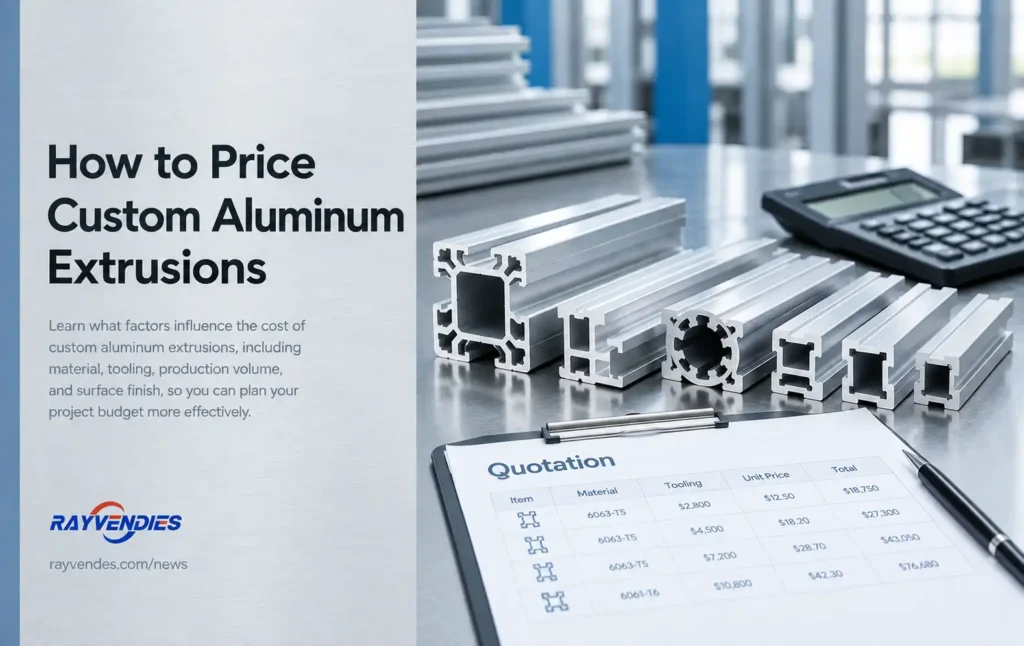
When standard profiles cannot meet the application requirements, custom aluminum extrusions can be designed around the final product.
A custom profile may integrate:
- Mounting channels
- Screw bosses
- Cable-management channels
- Snap-fit features
- Sealing grooves
- Heat-dissipation fins
- Decorative surfaces
- Structural ribs
- Fastener interfaces
This is where custom aluminum extrusion and custom extrusion aluminum become particularly valuable.
Instead of machining multiple components from solid aluminum, a manufacturer can potentially create a profile that combines several functions into one continuous section.
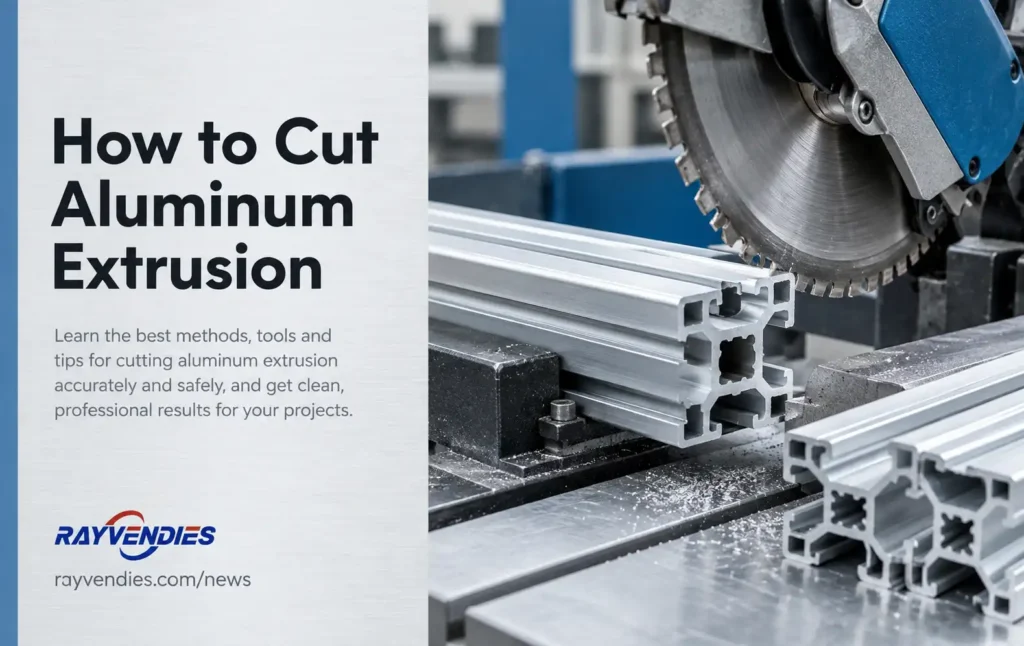
Custom aluminum extrusions suppliers can also provide services such as cutting, drilling, CNC machining, tapping, anodizing, powder coating, and assembly.
Aluminum Extrusion Sizes and Selection
There is no single “best” aluminum extrusion sizes for every project.
Smaller profiles such as 2020 aluminum extrusion are appropriate for lightweight structures and compact machines.
Medium profiles such as 3030 aluminum extrusion, 4040 aluminum extrusion, and 2040 aluminum extrusion are common in equipment frames and workstations.
Larger profiles such as 4080 aluminum extrusion, 8040 aluminum extrusion, and 8080 aluminum extrusion can provide greater stiffness for larger structures.
The correct selection depends on:
- Span length
- Applied load
- Deflection limit
- Joint configuration
- Dynamic loading
- Vibration
- Safety factor
- Weight constraints
- Profile orientation
- Environmental conditions
For a load-bearing aluminum extrusion frame, engineers should calculate bending stress, deflection, and buckling rather than selecting a profile purely by outside dimensions.
Aluminum Extrusion Applications
Modern aluminum extrusion is used across many industries.
Typical applications include:
- Industrial automation
- Robotics
- Machine guarding
- Conveyor systems
- Workstations
- Solar equipment
- Transportation
- Aerospace
- Automotive components
- Electronics
- LED lighting
- Architectural systems
- Medical equipment
- Laboratory equipment
- Cleanroom structures
Aerospace aluminum extrusions and aircraft aluminum extrusions require carefully controlled material specifications and manufacturing processes.
Architectural applications often use architectural aluminum extrusions, particularly where appearance, corrosion resistance, and surface finish matter.
For equipment construction, aluminum extrusion frame kits can accelerate prototyping and simplify assembly.
An aluminum extrusion workbench can be modified as requirements change, while an aluminum extrusion table can integrate shelves, fixtures, monitors, tools, and other accessories.
Anodized and Black Aluminum Extrusions
Surface treatment can significantly affect the appearance and performance of aluminum extrusion.
Anodized aluminum extrusions are common because anodizing improves surface hardness and provides an attractive finish.
A black aluminum extrusion may be selected when visual appearance, contrast, or equipment branding is important.
Surface finish should be considered before machining or joining because heating, grinding, and aggressive chemical treatment can alter the finished surface.
For a visible aluminum extrusion enclosure, the profile finish should be coordinated with panels, fasteners, brackets, and other visible components.
Aluminum Extrusion Connectors vs. Soldering
One of the biggest advantages of modular extrusion systems is that many structural joints can be created without soldering.
For example, an aluminum extrusion connector can join two profiles at a defined angle. Aluminum extrusion brackets can provide external reinforcement, while T-nuts allow components to be attached at adjustable positions.
This makes a T-slot aluminum extrusion frame particularly attractive for:
- Prototypes
- Machine upgrades
- Custom automation
- Temporary structures
- Production fixtures
- Laboratory equipment
- Adjustable workstations
Instead of permanently joining the frame, the designer can disassemble and reuse the profiles.
What About Aluminum Extrusion With Iron?
The phrase aluminum extrusion with iron can refer to several different situations.
It may describe an aluminum profile attached to a steel component, an aluminum-steel hybrid frame, or an extrusion containing steel inserts.
In these situations, the interface should be engineered for:
- Galvanic corrosion
- Thermal expansion
- Mechanical load
- Electrical isolation
- Fastener compatibility
- Environmental exposure
A mechanical interface is often preferable to soldering.
This is especially true for large industrial aluminum extrusions, where a bolted steel-to-aluminum connection can be designed, inspected, and serviced more easily.
Choosing an Aluminum Extrusion Manufacturer
If you are searching for aluminum extrusion companies, aluminum extrusion manufacturers, an aluminum extrusion company, or an aluminum extrusion manufacturer, do not evaluate suppliers on price alone.
Important supplier capabilities include:
- Alloy selection
- Die design
- Extrusion press capacity
- Dimensional control
- Surface finishing
- CNC machining
- Cutting
- Drilling
- Tapping
- Packaging
- Quality control
- Prototyping
- OEM/ODM support
A capable aluminum extrusion supplier should be able to discuss your application rather than simply provide a catalog of stock profiles.
For customers searching aluminum extrusions near me or aluminum extrusion near me, local availability can be useful for small projects. However, larger OEM projects often benefit from evaluating manufacturers based on technical capability, tooling experience, tolerances, finishing options, and production capacity.
The same principle applies when searching for american aluminum extrusion, aluminum extrusion suppliers, custom aluminum extrusions suppliers, or a manufacturer of aluminum extrusions.
Aluminum Extrusion Services and Custom Manufacturing
Professional aluminum extrusion services can extend far beyond the extrusion press itself.
A complete project may include:
- Engineering consultation
- Profile design
- Die development
- Prototype extrusion
- Material selection
- Extrusion production
- Heat treatment
- Cutting
- CNC machining
- Surface finishing
- Assembly
- Packaging
An aluminum extrusion machine or extrusion press is only one part of this manufacturing chain.
The extrusion press forces the heated billet through the die, but product quality ultimately depends on material control, die design, process parameters, cooling, straightening, aging, finishing, and inspection.
Can Aluminum Extrusion Be Repaired by Soldering?
Sometimes, but repair decisions should be based on function.
A small cosmetic or non-structural defect may potentially be repaired using a specialized aluminum filler.
A cracked load-bearing aluminum extrusion may require a completely different approach.
For structural damage, consider:
- TIG welding
- MIG welding
- Replacement of the damaged section
- Mechanical reinforcement
- Bolted plates
- Custom replacement extrusion
If the damaged profile is part of a machine frame, the engineer should evaluate whether the repair restores the original load path.
A soldered patch that looks acceptable may still have inadequate fatigue strength.
Aluminum Extrusion Scrap and Sustainability
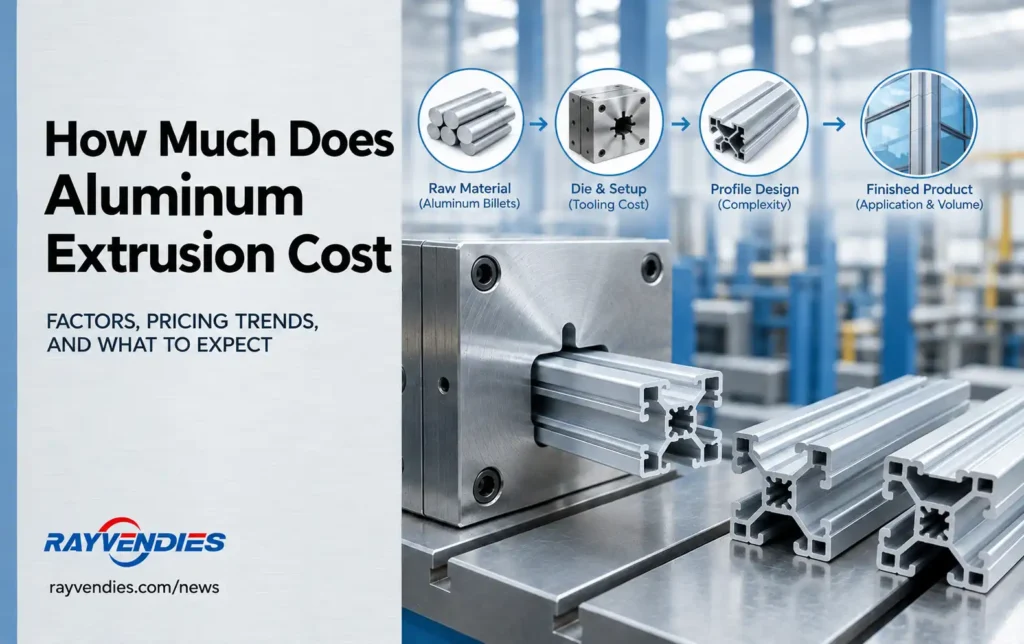
Aluminum is highly recyclable, which makes aluminum extrusion scrap price and recycling economics important considerations for manufacturers.
Scrap generated during extrusion, cutting, machining, and fabrication can often enter recycling streams.
For OEM customers, optimizing profile design can reduce:
- Material waste
- Machining time
- Assembly labor
- Shipping weight
- Number of individual components
A well-designed aluminum extrusion can therefore deliver value not only through its material properties but also through manufacturing efficiency.
How Rayven Can Support Your Aluminum Extrusion Project
For customers evaluating aluminum extrusion, the key question should not simply be “Can this aluminum be soldered?”
The more useful question is:
What is the most reliable and cost-effective way to manufacture and assemble this aluminum component?
Rayven can position its aluminum extrusion solutions around that engineering question.
Whether the requirement involves a standard profile, a T-slot frame, a custom channel, an enclosure, a rail, a structural tube, or a specialized OEM profile, the design should begin with the application’s actual requirements.
Rayven’s product consultation can help customers consider:
- Profile geometry
- Alloy selection
- Extrusion size
- T-slot compatibility
- Surface treatment
- Machining requirements
- Connector selection
- Assembly method
- Production volume
- Packaging requirements
- Custom tooling
For applications involving custom aluminum extrusions, the biggest opportunity is often to combine multiple functions into one profile.
Instead of soldering several small aluminum components together, a custom extrusion can potentially integrate mounting points, channels, ribs, and functional surfaces directly into the profile.
That can simplify assembly while improving repeatability.
Final Answer: Can You Solder Aluminum?
So, can you solder aluminum?
Yes—but aluminum soldering requires the correct filler, appropriate flux, careful oxide removal, controlled heating, and suitable joint design.
For small repairs, specialized aluminum soldering products can be useful. For aluminum tubing, radiators, thin sheet, cans, jewelry, and small components, the technique can work when the alloy and service requirements are appropriate.
For structural applications, however, soldering is not automatically the best solution.
If your project involves an aluminum extrusion, particularly a T-slot frame, machine structure, enclosure, workstation, rail, or custom industrial profile, mechanical joining or welding may offer better structural performance and easier maintenance.
The broader advantage of aluminum extrusion is that the profile itself can be engineered to simplify assembly. With the right geometry, alloy, finish, and connection hardware, manufacturers can create lightweight structures without relying on permanent soldered joints.
Rayven can help you evaluate the appropriate aluminum extrusion solution for your application—from standard profiles and T-slot systems to custom aluminum extrusions designed around your product.
If you are developing a new frame, enclosure, machine structure, rail, tube, or OEM component, contact Rayven to discuss your requirements and determine whether a standard or custom aluminum extrusion can provide a more efficient solution than soldering individual aluminum parts together.
Need a custom aluminum profile? Talk to Rayven about your application, material, dimensions, finish, quantity, and assembly requirements.