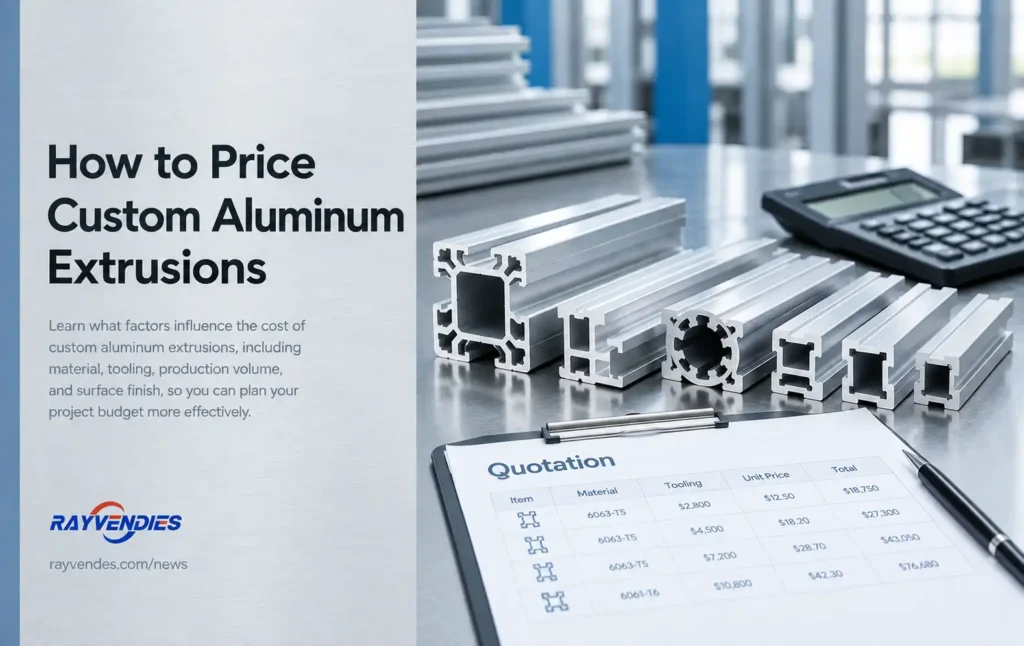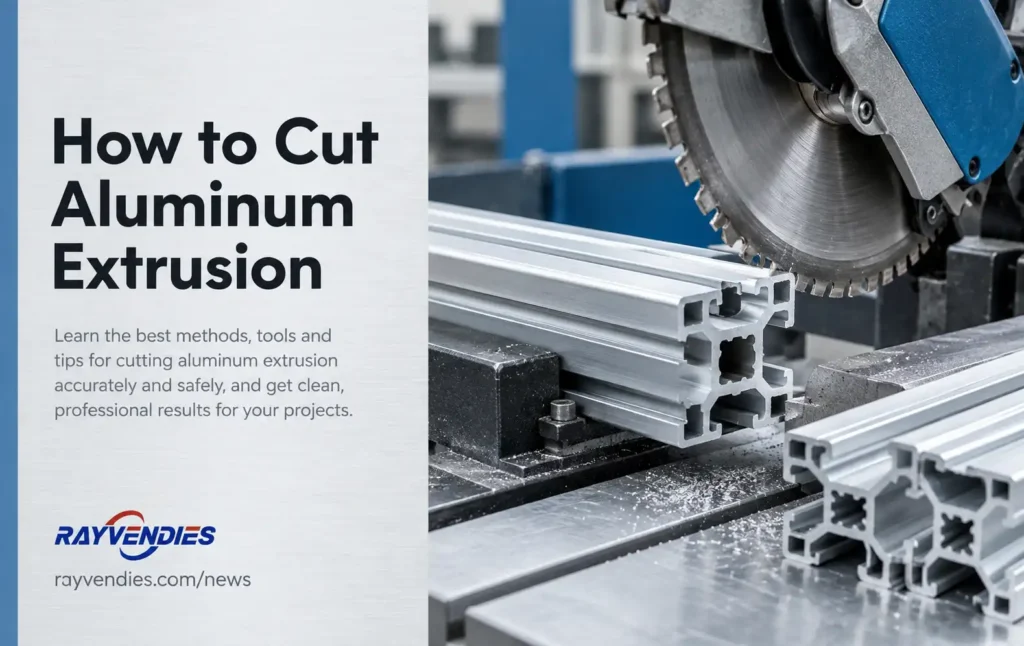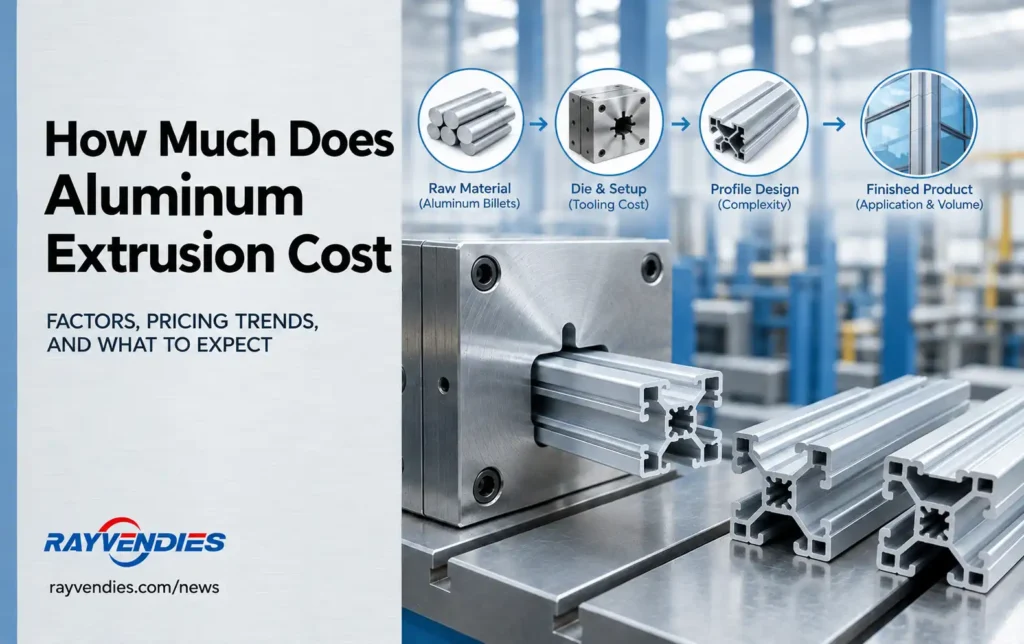
Modern manufacturing, architecture, and structural engineering rely heavily on versatile metal components that blend strength, precision, and low weight. The aluminum extrusion process has revolutionized how we build everything from lightweight electric vehicles to high-rise window facades and modular industrial workbenches. By forcing heated aluminum billets through precise steel dies, manufacturers produce continuous profiles with intricate cross-sections that would be impossible or cost-prohibitive to machine.
Understanding aluminum extrusion applications requires exploring the mechanics of the aluminum extrusion process, evaluating profile choices like t slot aluminum extrusion, and partnering with a trusted fabrication leader like Rayven to bring high-precision designs to life.
What is Aluminum Extrusion? Mechanics, Process, and Materials
The aluminum extrusion method reshapes aluminum alloy by forcing it through a custom-shaped opening under intense hydraulic pressure. The fundamental aluminum extrusion process flow chart follows a clear sequence:
- Billet Preparation: Cylindrical aluminum billets are preheated in a furnace to a specific aluminum extrusion temperature—typically between 800°F and 930°F (425°C to 500°C)—making the metal pliable without melting it.
- Pressing (Direct or Indirect Extrusion): A hydraulic ram pushes the heated billet through an aluminum extrusion press. Indirect extrusion reduces friction, producing superior inner and outer surface quality with tighter tolerances.
- Quenching & Exit: As the profile emerges onto the leadout table, air fans or water quenches cool it down rapidly to lock in mechanical properties.
- Stretching & Alignment: Once cooled, the material is transferred to a stretching table to relieve internal stresses and correct twist or bowing.
- Cutting & Age Hardening: Profiles are cut into stock or custom lengths and placed in heat-treatment ovens (artificial aging) to achieve optimal tempers, such as T5 or T6.
- Surface Finishing: Extrusions undergo anodizing, powder coating, sandblasting, or laser marking for enhanced durability and aesthetics.
Material Grades & Alloys
Choosing the right alloy determines structural integrity, finish quality, and corrosion resistance:
- 6063 aluminum extrusion: Often called architectural aluminum, 6063 aluminum extrusion and aluminum 6063 extrusion offer exceptional surface finish, high corrosion resistance, and suitability for anodizing. Used in architectural aluminum extrusions, trim, and framing.
- 6061 aluminum extrusion: Known as structural aluminum, 6061 aluminum extrusion delivers high yield strength, excellent weldability, and strong fatigue performance. Used in structural framing, aluminum extrusion workbench setups, and heavy industrial gear.
- Aerospace-Grade Alloys (2024, 7075, 7050): Applied in aerospace aluminum extrusions and aircraft aluminum extrusions where extreme strength-to-weight performance and high stress tolerance are essential.
Core Advantages: Why Choose Extruded Aluminum?
Compared to steel fabrications, plastic moldings, or cast parts, extruded aluminum offers several primary benefits:
- High Strength-to-Weight Ratio: Delivers structural rigidity while drastically reducing weight.
- Inherent Corrosion Resistance: Forms a protective oxide layer naturally, enhanced by anodized aluminum extrusions for outdoor or marine environments.
- Thermal and Electrical Conductivity: Acts as an efficient conductor for aluminum extrusion heat sinks, thermal management, and power distribution systems.
- Design Versatility: Incorporates continuous features like aluminum extrusion channel geometry, screw boss channels, alignment grooves, and stiffening ribs directly into the die profile.
- Cost Efficiency & Sustainability: Dies cost significantly less than plastic injection molds or casting dies. Aluminum is also 100% recyclable without property degradation.
6 Key Industry Applications of Aluminum Extrusion
1. Architecture and Building Construction
Architects utilize architectural aluminum extrusions, aluminum frame extrusion profiles, and extruded aluminum trim molding for high-performance building envelopes. Extrusions provide high structural stiffness against wind loads while remaining lightweight enough to simplify curtain wall installation.
- Curtain walls, shopfronts, and building facades
- Aluminum angle extrusion systems for suspended ceilings and decorative soffits
- Balustrades, glass railing supports, and bleacher seating
- Exterior doors, commercial window frames, and canopy supports
2. Automotive and Transportation
The push toward lightweight electric vehicles (EVs) has expanded aluminum extrusion automotive applications. Reducing vehicle mass directly improves battery range and fuel efficiency.
- Aluminum extrusion tube structures for EV battery enclosures and crash-box protection zones
- Roof rails, chassis subframes, and side-impact beam supports
- Structural members for commercial trailers, RVs, horse trailers, and marine hulls
3. Industrial Automation and Modular Framing
Manufacturing environments rely on t slotted aluminum extrusions, aluminum extrusion frame structures, and modular assemblies because they can be cut, connected, and modified without welding.
- Aluminum extrusion workbench units, assembly tables, and inspection carts
- T-slot aluminum extrusion protective machine guarding, Lexan safety barriers, and robotic cells
- Modular conveyor side rails, linear slide guides, and automated material handling tracks
4. Aerospace and Aviation
High-performance flight components require tight tolerances, clean microstructures, and high strength-to-weight ratios. Precision indirect extrusion and cold drawing ensure internal grain structure uniformity.
- Fuselage framing, floor beams, and seat tracks
- Wing rib stiffeners, cargo restraint tracks, and landing gear components
- Internal bracketry utilizing high-strength 7075-T6 and 2024-T3 alloys
5. Renewable Energy and Electronics
Aluminum’s high thermal conductivity makes it effective for passive cooling in electronics, while its weatherability supports solar deployments.
- Structural mounting rails and ground-mount racks for photovoltaic (solar) panels
- Finned heat sink extrusions for LED lighting, power electronics, and inverter housings
- Aluminum extrusion enclosure boxes for outdoor telecommunications and sensor nodes
6. Medical, Consumer Goods, and Mobility Equipment
Clean, non-toxic, and corrosion-resistant, extruded profiles serve high-touch consumer and medical devices.
- Rehabilitation frameworks, hospital bed structures, and precision medical equipment housings
- Lightweight mobility gear, wheelchair frames, and thin-wall drawn bicycle suspension tubes
- Sporting goods including baseball bats, lacrosse sticks, and camping equipment
Profile Types and Dimensional Standards
Choosing the right profile size ensures your framework supports design loads while remaining cost-effective. Common stock profiles include:
| Profile Designation | Common Name / Series | Primary Profile Features | Typical Applications |
| 1010 aluminum extrusion | 10 Series (1.0″ x 1.0″) | Compact, lightweight 1-inch imperial profile | Light-duty enclosures, small brackets, sensor mounts |
| 1515 aluminum extrusion | 15 Series (1.5″ x 1.5″) | Medium-duty 1.5-inch imperial profile | Industrial framing, trade show displays, machine bases |
| 2020 aluminum extrusion | 20 Series (20mm x 20mm) | Metric entry profile (20 20 aluminum extrusion) | Aluminum extrusion for 3d printer, small guarding |
| 2040 aluminum extrusion | 20 Series (20mm x 40mm) | Rectangular metric profile (aluminum extrusion 2040) | Axis rails, workstation cross-members, chassis frames |
| 2080 aluminum extrusion | 20 Series (20mm x 80mm) | Wide metric profile | Structural beams, linear motion tracks |
| 3030 aluminum extrusion | 30 Series (30mm x 30mm) | Standard European metric structural profile | Factory automation, medium-duty workbench frames |
| 3060 aluminum extrusion | 30 Series (30mm x 60mm) | Rectangular 30-series metric profile | Heavy-duty conveyor supports, dynamic gantries |
| 4040 aluminum extrusion | 40 Series (40mm x 40mm) | High-strength heavy metric profile | Heavy machine frames, industrial safety cages |
| 4080 aluminum extrusion | 40 Series (40mm x 80mm) | High-moment structural profile | Heavy load-bearing columns, large CNC gantry legs |
| 8040 aluminum extrusion | 80 Series / Heavy Metric | Structural profile (8040 aluminum extrusions) | Deep-span gantries, heavy robotic support cells |
| 8080 aluminum extrusion | 80 Series (80mm x 80mm) | Heavy-duty structural square profile | Maximum-load industrial infrastructure |
Standard geometric extrusions are also widely stocked across commercial distribution channels:
- Aluminum channel extrusions and aluminum extrusion channel profiles for sliding tracks, edge trim, and protective panel channels.
- Aluminum t extrusion, aluminum t slot extrusion, and aluminum t-slot extrusion shapes engineered for captive nut hardware sliding along continuous internal T-slots.
- Aluminum corner extrusion shapes designed for structural corner jointing, decorative cabinet edging, and seam sealing.
- 100 standard square tube aluminum extrusion and solid bar stock for structural support columns and heavy mechanical members.
Hardware, Connections, and Assembly
Joining aluminum extrusions efficiently requires standard mechanical fasteners and specialized connecting hardware:
- T Nuts for Aluminum Extrusion: Slip into or drop directly into the profile’s T-slot groove, locking firmly against the inner wall when tightened.
- Aluminum Extrusion Connectors & Fasteners: Include hidden corner cubes, central joint bolts, roll-in spring nuts, and automatic end-fasteners.
- Aluminum Extrusion Brackets & Gussets: Right-angle aluminum extrusion brackets, 3-way corner brackets, and flat joiner plates provide high joint rigidity.
- Aluminum Extrusion Hardware & Accessories: Cover end caps, slot-cover profile strips, aluminum extrusion slider units for manual linear motion, and leveling feet.
When designing modular frames, consult a comprehensive aluminum extrusion design guide to ensure proper profile selection, joint load distribution, and fast assembly without custom machining.
Comparative Analysis: T-Slot Profiles vs. Welded Steel vs. Structural Aluminum
Selecting structural materials for industrial frames, aluminum extrusion table builds, or machine guards involves balancing material cost, weight, assembly speed, and flexibility.
| Comparison Parameter | T-Slot Modular Extrusion (e.g., 8020 aluminum extrusion) | Welded Structural Steel | Welded / Standard Aluminum Tube |
| Assembly Speed | Fast; assembled with simple hand tools | Slow; requires qualified welders and prep | Moderate; requires precise welding |
| Modifiability | Fully adjustable and reconfigurable | Fixed; requires cutting and re-welding | Fixed; requires cutting and re-welding |
| Weight | Low (approx. 1/3 the density of steel) | High (adds significant total mass) | Low |
| Corrosion Resistance | Superior (standard anodized finish) | Poor unless painted or galvanized | Good (requires surface treatment) |
| Initial Material Cost | Moderate to High | Low to Moderate | Moderate |
| Total Installed Cost | Low (saves on labor, finishing, welding) | High (labor, grinding, painting, safety) | Moderate to High (specialized TIG labor) |
| Aesthetic Quality | Clean, modern, high-tech industrial | Industrial; requires grinding welds | Clean, but weld seams remain visible |
Industry Organizations, Sourcing, and Buying Considerations
When procuring aluminum extrusions for sale, understanding industry standards, trade policies, and sourcing channels helps ensure product quality and budget alignment.
Industry Standards & Trade Organizations
Organizations like the Aluminum Extruders Council (AEC) establish manufacturing guidelines, conduct design webinars, and support educational programs such as the aluminum extrusion design competition scholarship. Trade coalitions, including the u.s. aluminum extruders coalition, monitor fair trade practices, domestic supply chains, and anti-dumping standards to protect domestic production.
Sourcing Considerations
When searching for an aluminum extrusion supplier or searching online for aluminum extrusion near me, aluminum extrusions near me, aluminum extrusion companies near me, or 8020 aluminum extrusion near me, evaluate the supplier based on these factors:
- In-Stock Standard Profiles: Check availability of standard structural series like 80/20 aluminum extrusion, 80 20 aluminum extrusion, 80 20 aluminum extrusions, 80-20 aluminum extrusion, 80/20 aluminum extrusions, or 10 series aluminum extrusion.
- Manufacturing Capabilities: Confirm whether the vendor offers direct press capabilities, indirect extrusion, cold drawing for tight tolerances, CNC machining, cutting, tapping, and finishing services.
- Location & Logistics: Working with established domestic aluminum extrusion manufacturers, an american aluminum extrusion supplier, or an aluminum extrusion company near your facility reduces transit times and shipping costs.
- Custom Extrusion Options: For unique geometry, partner with custom aluminum extrusions suppliers capable of engineering custom dies rather than relying solely on stock profiles.
- Pricing Transparency: Look beyond raw metal scrap indices (such as the base aluminum extrusion scrap price) to evaluate total project value, including die lifetime, machining accuracy, and surface finishing quality.
Why Partner with Rayven for Precision Aluminum Extrusions?
When off-the-shelf structural profiles fail to meet strict tolerances, delicate surface finish needs, or demanding structural requirements, Rayven delivers tailored precision manufacturing solutions. Rayven specializes in high-precision custom aluminum extrusions, drawn tubing, and engineered aluminum frame extrusions built for performance-critical applications.
1. Superior Mechanical Performance via Indirect Extrusion
Rayven utilizes advanced indirect extrusion presses that significantly cut friction during production. This process yields:
- Uniform internal grain alignment and microstructure.
- Higher tensile and yield strength consistency across long profile lengths.
- Superior inner and outer surface finish ideal for high-spec anodizing.
2. High Precision Cold Drawing
When standard commercial extrusions fall short on dimensional tolerance, Rayven’s secondary cold-drawing process delivers tight dimensional accuracy, exceptional straightness, and improved surface hardness. This makes Rayven profiles ideal for hydraulic applications, shock absorber tubes, medical equipment, and dynamic linear motion assemblies.
3. Integrated Secondary Finishing and Machining
Rayven provides complete turnkey manufacturing under one roof:
- Precision Finishing: Matte sandblasting, decorative clear or color anodizing, protective spray coating, and durable laser marking for part traceability.
- Fabrication Services: Precision multi-axis CNC milling, miter cutting, drilling, tapping, slotting, and structural sub-assembly.
- Custom Profile Design: Direct engineering support to refine your profile cross-section for maximum strength, minimal weight, and reduced manufacturing cost.
Whether you are designing next-generation electric vehicle componentry, modular factory automation framing, or precision medical equipment, Rayven offers end-to-end engineering, extrusion, and finishing services tailored to your exact specifications.
Ready to start your next extrusion project? Contact the engineering team at Rayven today to request a custom quote, review profile designs, or discuss your application requirements with an industry-leading aluminum extrusion manufacturer.
Standard vs. Custom Aluminum Extrusions
Buyers usually face a choice between standard profiles and custom sections.
Standard Profiles
Standard sections offer:
- Faster availability
- Lower tooling requirements
- Easy sourcing
- Established accessory ecosystems
- Proven structural data
- Lower initial development costs
Common searches include standard aluminum extrusions, stock aluminum extrusions, and aluminum extrusions for sale.
Custom Profiles
Custom aluminum extrusions are appropriate when standard profiles create compromises in:
- Structural performance
- Weight
- Packaging
- Assembly
- Thermal management
- Appearance
- Functional integration
A custom aluminum extrusion may combine several functions into one component, reducing the number of parts required.
This is particularly valuable for OEM products where every additional bracket, fastener, machining operation, or assembly step contributes to total cost.
AEC’s current design resources emphasize that extrusion can integrate multiple functions into a profile and reduce downstream manufacturing work.
Custom Aluminum Extrusion vs. Other Materials
A common engineering question is whether aluminum is better than steel, plastic, or a hybrid design.
Aluminum vs. Steel
Aluminum is usually selected when low weight, corrosion resistance, and ease of fabrication are priorities. Steel may be preferable where very high load capacity, extreme wear resistance, or lower material cost for a particular design is more important.
Aluminum vs. Plastic
Aluminum offers higher structural rigidity and better heat conduction, while engineered plastics can provide insulation, lower density, or specialized chemical resistance.
Aluminum vs. Aluminum-Steel Hybrid Structures
In some applications, designers may use aluminum extrusion with iron or steel components where different material properties are needed. The engineering challenge then includes galvanic corrosion, thermal expansion, joint design, and load transfer between dissimilar materials.
The correct answer depends on the application rather than the material category alone.
Emerging Trends in Aluminum Extrusion Applications
The extrusion market is evolving alongside major manufacturing trends.
Electrification
EVs and electrified equipment are driving demand for lightweight structural and thermal-management components.
Industrial Automation
Robotics, autonomous equipment, machine vision, and high-speed manufacturing increase demand for modular, lightweight framing and precision profiles.
AEC specifically cites robotics and linear-motion systems as important industrial extrusion applications.
Solar Energy
PV deployment continues to expand the need for durable outdoor framing and mounting systems.
Sustainable Manufacturing
Recycled aluminum and energy-efficient production are becoming more important considerations in procurement decisions. AEC reports meaningful long-term improvements in industrial energy use and emissions and highlights recycling as an important sustainability advantage of aluminum.
Integrated Design
Instead of treating extrusion as a simple structural bar, more engineers are using the profile as a platform for multiple functions.
This can mean integrating:
- Mounting points
- Cable channels
- Cooling fins
- Fastening features
- Sealing surfaces
- Structural ribs
- Decorative surfaces
The result can be fewer components and simplified assembly.
Aluminum Extrusion for Specialized Products
The versatility of aluminum extrusion becomes particularly clear in specialized applications.
For example:
Aluminum extrusion rail systems can be used for mechanical movement, linear positioning, or mounting.
Aluminum extrusion slider structures can support adjustable components and linear systems.
Aluminum extrusion parts can be machined into brackets, housings, fixtures, frames, and specialized components.
An aluminum extrusion enclosure can simultaneously provide mechanical protection and thermal management.
An aluminum frame extrusion can form the structural basis of equipment, furniture, displays, and industrial systems.
Even profiles described simply as an aluminum extrusion channel or slotted aluminum extrusion can be engineered into sophisticated systems once connectors and accessories are integrated.
How Rayven Can Support Your Aluminum Extrusion Project
Selecting the correct profile is only part of an extrusion project. The larger objective is to create a component that is manufacturable, cost-effective, consistent, and appropriate for its application.
Rayven can position its extrusion service around that complete development process.
For customers developing an OEM product, this means moving from an initial concept toward a production-ready extrusion rather than simply supplying a piece of metal.
A practical Rayven project workflow can include:
- Application review – Understand the structural, thermal, dimensional, environmental, and aesthetic requirements.
- Profile development – Review the proposed cross-section and identify opportunities to improve manufacturability.
- Alloy selection – Match alloy and temper to the actual performance requirements.
- Tooling development – Develop the extrusion die around the target geometry.
- Production – Manufacture profiles according to agreed specifications.
- Fabrication – Add cutting, drilling, tapping, CNC machining, or other secondary operations where needed.
- Finishing – Apply anodizing, powder coating, painting, or other specified treatments.
- Inspection – Verify dimensions, surface condition, and other quality requirements.
- Packaging – Protect finished profiles during storage and transportation.
This approach can be especially valuable when custom aluminum extrusions suppliers are being evaluated for long-term OEM programs.
The biggest advantage is not simply having access to aluminum. It is having a supply partner that understands how profile geometry, material, tooling, fabrication, finishing, and assembly interact.
Aluminum Extrusion Applications: Quick Selection Guide
The following table provides a practical starting point for engineers and procurement teams.
| Application | Recommended Profile Direction | Key Considerations |
|---|---|---|
| Machine frame | T-slot structural profile | Load, span, vibration, modularity |
| Workbench | Medium T-slot profile | Ergonomics, accessories, adjustability |
| Solar rail | Corrosion-resistant structural profile | Outdoor exposure and installation |
| Heat sink | Fin-rich custom profile | Thermal performance |
| Window frame | Architectural profile | Finish, thermal break, sealing |
| EV structure | Custom structural extrusion | Crash, mass, thermal management |
| Electronics enclosure | Hollow/custom profile | EMI, cooling, sealing |
| Conveyor | Structural rail/profile | Rigidity, alignment |
| 3D printer frame | Small T-slot profile | Precision and rigidity |
| Display system | Lightweight modular profile | Appearance and assembly |
| Aerospace component | Engineered precision profile | Alloy, tolerance, certification |
| Medical equipment | Clean finished profile | Corrosion resistance and appearance |
Common Aluminum Extrusion Search Terms and What They Usually Indicate
Online searches can also reveal what customers are trying to buy.
10 series aluminum extrusion, 15 series aluminum extrusion, 1010 aluminum extrusion, and 1515 aluminum extrusion generally indicate smaller modular framing systems.
20×20 aluminum extrusion, 2020 aluminum extrusion, and 2040 aluminum extrusion typically relate to compact machine frames and desktop equipment.
4040 aluminum extrusion, 4080 aluminum extrusion, 8040 aluminum extrusions, and 8080 aluminum extrusion generally indicate larger structural applications.
Aluminum t extrusion, aluminum t extrusion, t slot extrusion aluminum, and t slotted aluminum extrusion indicate buyers looking for modular framing systems and compatible hardware.
Aluminum tube extrusion, aluminum extrusion tube, and aluminum channel extrusions are more likely to indicate application-specific tubular or channel requirements.
Meanwhile, custom extrusion aluminum, custom aluminum extrusions, and custom aluminum extrusion usually indicate a requirement beyond standard catalog framing.
Understanding this intent helps engineers distinguish a simple stock-profile purchase from a project requiring actual extrusion engineering.
Final Thoughts on Aluminum Extrusion Applications
The strength of aluminum extrusion lies in its ability to combine material efficiency with geometric flexibility.
From windows and solar structures to EV battery systems, robotics, heat sinks, machine frames, aerospace components, and medical equipment, the range of aluminum extrusion applications continues to expand because engineers can tailor the profile around the function.
The most successful projects begin with the application rather than the profile catalog.
Instead of asking only which aluminum extrusions are available, consider:
- What load must the profile carry?
- What span does it need to cover?
- Does the profile need to move?
- Does it need thermal management?
- Will it be exposed to moisture or chemicals?
- How will it be joined?
- Does it need machining?
- What finish is required?
- Is a standard profile sufficient?
- Would a custom profile reduce total assembly cost?
These questions transform aluminum extrusion design from a simple material decision into an integrated engineering decision.
The AEC’s current industry resources continue to emphasize design innovation, extrusion technology, sustainability, applications, and emerging markets such as transportation, industrial automation, energy, and healthcare.
For companies developing a new product, optimizing an existing component, or sourcing production-ready profiles, Rayven can help evaluate the extrusion concept, determine whether a standard or custom section is more appropriate, and develop a manufacturing path around the project’s actual requirements.
Whether your starting point is an aluminum extrusion frame, a T-slot workstation, a thermal-management component, a solar mounting rail, an automotive structure, or a completely new OEM profile, the objective should be the same: achieve the right balance of performance, manufacturability, appearance, reliability, and total cost.
Contact Rayven to discuss your aluminum extrusion project and request a tailored solution for your application, profile design, fabrication, and production requirements.